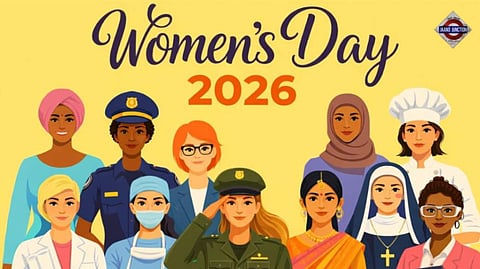

International Women's Day (IWD) has existed as both a celebration and a demand throughout its history. The international community demands two specific actions for this year: The first task requires authorities to eliminate all legal restrictions which prevent women and girls from accessing fundamental rights. The second task requires authorities to establish new judicial systems which will provide equal protection to all citizens. The United Nations declares its 2026 campaign theme "Rights. Justice. Action. For ALL Women and Girls" which designates the day as an opportunity to transform public commitments into official regulations and operational judicial systems. UN Women.
A new UN analysis released ahead of March 8 finds that, when measured across core areas of public and private life, women still possess only about 64 per cent of the legal rights available to men. Those legal shortfalls in areas such as employment, property, family law, movement, business and pensions translate into fewer economic opportunities, weaker protection from violence, and greater dependence on others for safety and income. The report presents this issue as a rights gap because existing laws and missing laws constantly discriminate against women.
International Women’s Day on March 8 is a century-old observance rooted in labour movements and suffrage struggles; it was formally recognised by the United Nations in 1975. Over the decades it has evolved into a global day for celebrating achievements while pressuring governments, businesses and institutions to close gaps in pay, representation, safety and rights. The 2026 focus on legal equality reminds us that policy and law remain decisive levers, progress in social attitudes must be matched by binding legal protections.
The 64% figure and the UN’s paired call-to-action are the immediate development driving coverage and events on IWD 2026. In parallel, UN agencies and partner organizations staged briefings and online events this week to press governments and justice actors for concrete reforms from simplifying legal procedures for survivors of violence to harmonizing family and property law so women don’t lose access to land and pensions. These requests do not function as mere symbols because the United Nations established a connection between their warning and a Secretary-General report which recommended legislative audits and gender-responsive legal aid and stronger enforcement mechanisms.
International Women’s Day 2026 is not just about hashtags or ceremonies. With the UN’s new figures and recommendations, the day has been reframed as a practical accountability moment: who will translate “rights” into enforceable law, “justice” into functioning institutions, and “action” into budgets, staff and measurable outcomes? For citizens, the test will be whether legal gaps shrink and whether women and girls begin to experience equal protection, mobility, and economic opportunity in their daily lives.

