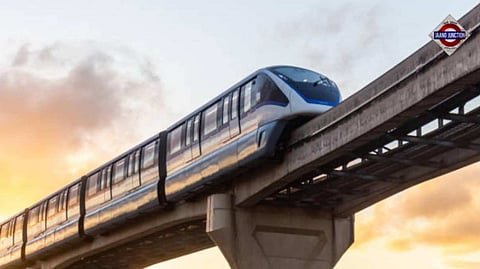

The Great Indian Seat Hunt
When I came back to India after years of working abroad, I thought I knew what it meant to return home.
I was wrong.
Home, I discovered, is not always the place you left behind.
Sometimes home is a place that has continued living without you.
The roads have changed. The buildings have grown taller. Familiar shops have disappeared. New cafés have appeared where old memories used to stand. The traffic has become more ambitious. The people seem to be moving faster. Even the air appears to have acquired more responsibilities.
And then there is Delhi.
Delhi does not welcome you gently.
Delhi welcomes you with a horn.
Then another horn.
Then a bus overtaking you from a direction you did not know existed.
Then an auto-rickshaw appearing in the three-inch gap between your car and another vehicle.
Then a traffic signal that seems to have been designed by someone who dislikes punctuality.
I had returned to India to begin a new professional chapter. A new job in Delhi. A new routine. New colleagues. New responsibilities. New targets.
And naturally, I wanted to reach the office on time.
This was my first mistake.
Because I had forgotten one important fact about Delhi.
Delhi does not care about your office timing.
Delhi has traffic.
And traffic has its own calendar.
My First Battle With Delhi Traffic
On my first few days, I considered travelling by road.
Why not?
I had spent years abroad. I had travelled through European cities where public transport could make you feel that civilisation had finally solved something.
You check the time.
The cab arrives.
You board.
You sit.
You reach.
Simple.
So I looked at Delhi and thought, "How complicated can this be?"
Very.
Very complicated.
The first morning I left for office, Google Maps gave me a beautiful number.
Forty-five minutes.
Forty-five minutes!
I smiled.
I had time.
I was relaxed.
I had my laptop on my shoulder and my office clothes were still reasonably fresh.
I imagined reaching office early, having coffee and perhaps impressing everyone with the punctuality of the new employee.
Forty-five minutes later, I was still on the road.
The map had changed.
The forty-five minutes had become fifty-five.
Then sixty-five.
Then seventy-five.
At some point, I stopped trusting Google Maps.
The traffic had clearly taken control of the application.
I began noticing the same vehicles around me.
An auto-rickshaw was beside me for so long that I started recognising the driver.
A motorcycle had somehow become a permanent member of my commute.
A bus appeared in front of me and stayed there with the determination of a government employee who had no intention of being rushed.
The traffic moved perhaps five metres.
Then stopped.
Moved again.
Stopped again.
I looked at the clock.
I looked at the traffic.
I looked at my laptop.
I looked at the traffic again.
And somewhere between two red lights, I had an important professional realisation:
I did not need a faster car. I needed a different transportation system.
That was when I turned towards the Delhi Metro.
The Metro
The first thing I loved about the Metro was that it moved.
That sounds like a very basic requirement for public transport.
But after spending time in Delhi traffic, movement itself begins to feel like a luxury.
The Metro did not care about traffic jams.
It did not care about impatient drivers.
It did not care about people changing lanes without indicators.
It had tracks.
It had stations.
It had a timetable.
It had a certain confidence.
The Metro simply said:
I know where I am going.
I liked that.
So I became a regular commuter.
Every morning I would leave home with my laptop, office bag, phone and whatever remained of my morning optimism.
I would enter the station.
Tap my card.
Walk towards the platform.
Wait.
The train would arrive.
The doors would open.
And then I discovered something I had not anticipated.
The Delhi Metro may be excellent at moving people.
But it is not particularly generous with seats.
The Great Seat Hunt
Getting a seat in the Delhi Metro is not a transportation problem.
It is a psychological exercise.
It requires patience.
Observation.
Strategy.
Timing.
And occasionally, divine intervention.
During my first few days, I thought people simply sat wherever a seat was available.
Again, I was wrong.
Regular Metro commuters are highly trained professionals.
They know things.
They know exactly where to stand.
They know which coach is likely to be less crowded.
They know which station will have people getting down.
They know which passenger has been sitting long enough to become a potential candidate for departure.
They can identify a person who is about to leave from the smallest movement.
A man sitting by the window checks his phone.
Nobody reacts.
He adjusts his bag.
Two people notice.
He looks towards the door.
Three people notice.
He shifts his body.
Now five people are watching.
He finally stands.
The competition begins.
There is no announcement.
No whistle.
No referee.
Yet everyone understands the rules.
A seat has become available.
Three people move towards it.
One wins.
Two lose.
Nobody complains.
Everyone pretends they didn't care.
This is perhaps the most impressive acting I have seen in public life.
A man can spend fifteen minutes standing with one eye permanently fixed on a vacant-seat possibility.
Then somebody else sits first.
The man immediately looks at his phone and smiles as if he has just received excellent news.
"Seat? What seat?"
Of course he wanted the seat.
He wanted it more than he wanted anything else at that moment.
But dignity must survive.
So he pretends.
The Science of Standing
There is an art to standing in a Metro.
You cannot simply stand anywhere.
Every square foot has a purpose.
Stand too close to the door and you become part of the boarding problem.
Stand too far inside and you may get trapped behind seventeen people when your station arrives.
Stand under the overhead handle and you have some stability.
Stand near the pole and somebody else will almost certainly want the same pole.
Stand in the middle and you become vulnerable to movement from every direction.
The Metro teaches you geometry without ever showing you a mathematical equation.
You learn angles.
Distances.
Body positioning.
Exit trajectories.
Human behaviour.
You become aware of elbows.
Backpacks.
Laptop bags.
Shopping bags.
Water bottles.
Phone screens.
And occasionally somebody's umbrella.
There is always an umbrella.
Even when there is no rain.
Delhi Metro commuters believe in preparedness.
And perhaps that is wise.
Because in the Metro, you never know what the next thirty seconds will bring.
A sudden crowd.
A sudden empty seat.
A sudden passenger movement.
A sudden phone call.
A sudden person entering with a suitcase that appears larger than their apartment.
Everything is possible.
The Reserved Seats
Of course, there are rules.
The first coach of the Metro is reserved for women.
Within the coaches there are also seats reserved for senior citizens and other passengers who require priority seating.
These arrangements are important.
Women deserve safety and dignity while travelling.
Senior citizens deserve consideration.
People with disabilities and others who genuinely require priority seating should receive it.
I have no argument with that.
The interesting part begins somewhere else.
Because sometimes you are sitting on an ordinary seat.
Not a reserved seat.
Not a priority seat.
Just a normal seat.
You have earned it through luck, timing or twenty minutes of standing.
You finally sit.
Your laptop bag comes off your shoulder.
Your back relaxes.
Your feet stop complaining.
You take your phone out.
You look at the time.
You think:
"Finally."
Then the Metro stops.
The doors open.
People enter.
And someone comes and stands directly in front of you.
Now the internal debate begins.
You look up.
They look at you.
You look down.
They continue standing.
You look at your phone.
Your phone suddenly becomes the most interesting object in the world.
You scroll through WhatsApp.
There are no new messages.
You open Instagram.
You have already seen everything.
You open email.
There are thirty-seven unread messages.
You close email immediately.
You look outside.
There is a tunnel.
You look at the Metro map.
You know exactly where you are.
But suddenly studying the Metro map seems intellectually rewarding.
Then you look back.
Eye contact.
The game is over.
Your conscience has won.
You stand.
"Please sit."
And just like that, your five-minute reign as the King of Seat Number 47 has ended.
The Indian Male's Great Dilemma
This is where I began developing a strange sympathy for men travelling in the Metro.
Because there is a very particular situation that seems to happen again and again.
A man finally gets a seat.
He sits.
He relaxes.
And within minutes someone who may need the seat more is standing in front of him.
Now the man has a decision to make.
Give up the seat?
Keep sitting?
Pretend not to notice?
Pretend to sleep?
Look at the phone?
Look outside?
Become suddenly fascinated by the ceiling?
There are many techniques.
The most popular one is sleep.
Strategic Metro Sleep
I have seen some remarkable sleeping performances in the Delhi Metro.
These men do not simply close their eyes.
They create a complete atmosphere.
Head slightly tilted.
Eyes closed.
Earphones inserted.
Mouth relaxed.
Body motionless.
Expression peaceful.
They look as if they have spent the last ten years searching for inner peace and have finally found it between two Metro stations.
Then an elderly person enters.
The person stands right in front of them.
The sleeping man does not move.
Not even a little.
You begin to wonder whether he is genuinely asleep.
Then someone at the other end of the coach says:
"Rajiv Chowk!"
The sleeping man's eyes open instantly.
He looks around.
Checks the station.
Realises it isn't his stop.
Closes his eyes again.
I have immense respect for this level of awareness.
This is not sleep.
This is advanced selective consciousness.
The man's body is sleeping.
His Metro intelligence is wide awake.
He knows his station.
He knows the seat.
He knows the passenger standing in front of him.
He knows exactly when the doors will open.
But somehow he knows nothing when someone asks:
"Beta, seat milegi?"
At that moment, he has achieved complete spiritual detachment.
I Understand Him
It is easy to laugh at the sleeping man.
And I do.
But after observing enough commuters, I started understanding him too.
Maybe he is not a bad person.
Maybe he is simply tired.
Maybe he woke up at six.
Maybe he has already spent forty minutes travelling to the station.
Maybe he has a difficult day ahead.
Maybe he slept only four hours.
Maybe he is carrying responsibilities that nobody sitting around him knows anything about.
That thought changed the way I looked at the Metro.
Initially, I saw passengers.
Then I began seeing people.
There is a difference.
A passenger is someone travelling from one station to another.
A person is someone travelling through an entire life.
The Laptop Warriors
Every morning, I began noticing the same kind of men.
Laptop on one shoulder.
Office bag on the other.
Phone in one hand.
Metro card somewhere in the pocket.
Formal shirt.
Trousers.
Shoes.
Sometimes a tie.
Sometimes the tie has already surrendered.
Their faces often carry the expression of people who have mentally opened their inbox before physically reaching the office.
They stand quietly.
Some scroll through emails.
Some watch videos.
Some read news.
Some listen to music.
Some sleep.
Some stare into the distance.
And I began wondering about them.
The man standing beside me might be a sales manager.
The man near the door might be an accountant.
The man sitting quietly may be a software engineer.
The person with the old backpack may be supporting his parents.
The young man checking his phone repeatedly may be waiting for a message from home.
The person staring blankly at the floor may have had a terrible morning.
We cannot tell.
We rarely ask.
We simply move around one another.
Thousands of lives packed into one coach.
Everyone Is Carrying Something
That became one of the strangest things I noticed about the Metro.
Everyone is carrying something.
Some carry bags.
Some carry laptops.
Some carry children.
Some carry groceries.
Some carry lunch boxes.
Some carry books.
Some carry flowers.
Some carry tiredness.
Some carry ambition.
Some carry disappointment.
Some carry debt.
Some carry responsibility.
And some carry things that cannot be seen.
You can look at a person and know what is hanging from their shoulder.
You cannot know what is sitting inside their heart.
The Metro does not tell you.
It simply puts everyone together.
A CEO may stand next to a junior employee.
A student may stand beside a lawyer.
A domestic worker may sit across from a corporate executive.
A businessman may be standing next to someone who has just started his first job.
For twenty minutes, the city removes many of the labels we spend our lives building.
Inside the coach, everyone is simply trying to reach somewhere.
The Morning Faces
There is something about people's faces in the morning.
Some are fresh.
Some are irritated.
Some are sleepy.
Some are expressionless.
Some are already smiling at their phones.
Some are laughing at messages.
Some are fighting with somebody over the phone.
Some are silently rehearsing conversations they are going to have at work.
You can almost see the day beginning inside their heads.
For one person, the morning may mean a promotion discussion.
For another, it may mean asking the boss for leave.
For another, it may mean worrying about an overdue payment.
For another, it may mean finally getting a job after months of searching.
For another, it may mean going to a workplace they desperately want to leave.
The same train.
Different destinations.
Different battles.
Different hopes.
The Man Who Never Complains
There is a particular kind of Indian working man I have started noticing.
He doesn't complain much.
He gets up.
He goes to work.
He comes home.
He pays bills.
He deals with problems.
He manages family responsibilities.
He gets tired.
He sleeps.
Then he does it again.
There is a strange expectation attached to being a man in our society.
You are expected to manage.
To provide.
To remain strong.
To keep moving.
If you are exhausted, you are expected to recover quietly.
If you are worried, you are expected to handle it.
If you are afraid, you are expected to hide it.
If you are struggling financially, you are expected to find a solution.
If work is difficult, you are expected to continue.
And if you are sitting in a Metro seat when someone else needs it, you are expected to stand.
Sometimes I wonder whether we have made "being okay" into a compulsory uniform for men.
The Invisible Weight
I remember looking around one morning and noticing a man standing opposite me.
He had a laptop bag.
Nothing unusual.
But for some reason, I kept looking at him.
He looked tired.
Not dramatically tired.
Not the kind of tiredness that attracts attention.
Just ordinary tiredness.
The kind that has become part of someone's routine.
His eyes were slightly heavy.
His shirt was neatly tucked in.
His shoes were polished.
His laptop bag looked heavy.
He checked his phone.
Put it away.
Checked it again.
Then looked towards the door.
I wondered where he was going.
Maybe he was going to a meeting.
Maybe he was going to negotiate a deal.
Maybe he was going to ask for a salary increase.
Maybe he was going to fire someone.
Maybe he was going to get fired.
Maybe he was going to present a project that had taken months.
Maybe none of those things.
Maybe he was simply going to work.
But behind that simple act of going to work could be an entire family depending on him.
A house.
Parents.
Children.
Loans.
School fees.
Medical expenses.
Future plans.
Dreams.
Fear.
Hope.
Nobody around him would know.
He was just another man in a Metro.
The Metro Does Not Ask Questions
That is perhaps the most democratic thing about the Metro.
It does not ask who you are.
It does not ask how much you earn.
It does not ask whether you are successful.
It does not ask whether your marriage is happy.
It does not ask whether your business is failing.
It does not ask whether your boss likes you.
It does not ask whether you are lonely.
It does not ask whether you slept last night.
You enter.
You pay.
You travel.
That's it.
For a few minutes, your entire biography disappears.
You are simply one more passenger.
And perhaps that is why people sometimes look so peaceful inside the Metro.
Nobody is demanding a performance from them.
They can stare at their phones.
Close their eyes.
Listen to music.
Look outside.
Disappear into their own thoughts.
The Door Crowd
Of course, peace is not guaranteed.
Especially near the doors.
There is another species of Metro commuter.
The Door Guardian.
This person positions himself directly in front of the door.
Not to enter.
Not to exit.
Just to stand there.
The doors open.
People inside need to get out.
People outside need to get in.
The Door Guardian remains exactly where he is.
You wonder what is happening.
Someone says:
"Side please."
Nothing.
Someone says:
"Bhai, pehle logon ko utarne do."
Nothing.
The Door Guardian appears to be conducting a personal experiment on urban patience.
Eventually the crowd forces him sideways.
The doors close.
He survives.
The train moves.
And at the next station, he does it again.
The Great Entry
Then there is the person who sees the Metro arriving and begins running.
The train is still fifty metres away.
The person is already preparing.
Bag bouncing.
Shoes moving.
Phone in hand.
Face determined.
The train arrives.
Doors open.
Passengers begin getting out.
The runner waits approximately half a second.
Then enters.
Mission accomplished.
He finds a place.
He looks exhausted.
But also victorious.
This is another thing India has taught me.
We do not merely travel.
We compete with transportation.
The Seat Lottery Continues
Despite everything, my obsession with seats continued.
I started developing my own strategies.
I learned where to stand.
I learned how to watch passengers without looking like a stalker.
I learned how to identify someone who was likely to get down.
I learned that a person checking the station board is not necessarily leaving.
I learned that a person standing up may simply be adjusting their clothes.
I learned not to move too early.
I learned not to move too late.
Most importantly, I learned not to celebrate.
Never celebrate.
A seat can appear and disappear faster than a corporate promise.
One morning, I saw an empty seat.
I moved towards it.
Someone else moved too.
We reached it simultaneously.
For a brief moment, we both stopped.
He looked at me.
I looked at him.
There was no anger.
No argument.
Just recognition.
Two men.
One seat.
Both tired.
Both trying to get through the morning.
He sat.
I stood.
And I remember thinking:
Fair enough.
Maybe he needed it more.
Or maybe he was simply faster.
Either way, life continued.
What About Women?
This is where I want to be careful.
The story of the Metro seat is not a story about men versus women.
It shouldn't become one.
Women have their own struggles in public transport.
Crowding.
Safety.
Unwanted attention.
Uncomfortable journeys.
The daily calculation of where to stand and whom to avoid.
Reserved coaches and seats exist for reasons.
They provide protection and priority.
That matters.
The point is not that men should suddenly become victims of the seat system.
The point is much simpler.
Men get tired too.
That is all.
A tired man is still tired.
A working man is still a human being.
A person carrying responsibility does not stop needing kindness simply because he happens to be male.
Perhaps we can hold both truths at the same time.
We can protect those who need protection.
And we can remember that everyone has a limit.
The Indian Art of Pretending Everything Is Fine
Maybe this is not even a Metro story.
Maybe it is an Indian story.
We are remarkably good at saying:
"All good."
When nothing is good.
A man can be worried about money and say, "All good."
A woman can be exhausted and say, "I'm fine."
A student can be terrified about exams and say, "Manage ho jayega."
A parent can be worried about their child and smile anyway.
A businessman can be losing sleep over his company and still walk into a meeting confidently.
We have learned to carry things quietly.
The Metro simply gives us a place where those quiet burdens become visible for a few minutes.
Laptop bags.
Office bags.
Backpacks.
Tired faces.
Silent phones.
Closed eyes.
The Evening Metro
The morning Metro has ambition.
The evening Metro has exhaustion.
There is a difference.
In the morning, people are going somewhere.
In the evening, people are trying to go home.
You can see it.
The formal shirts are no longer as formal.
The hair has lost its morning confidence.
The shoes look tired.
The bags seem heavier.
Phones are held lower.
People speak less.
Some sleep.
Some stare through the window.
Some stand with their eyes closed.
The office day has taken whatever energy it could.
Now everyone wants one thing.
Home.
And the Metro begins carrying them back.
Home
I think there is something deeply emotional about watching people return home.
A man standing with his laptop may be going back to his wife and children.
A woman may be going back to her parents.
A young person may be going back to a rented room where nobody is waiting.
A student may be going back to a hostel.
A senior citizen may be returning from an appointment.
Everybody has a destination.
But "home" means something different to everyone.
For some, home is comfort.
For some, home is responsibility.
For some, home is loneliness.
For some, home is where dinner is waiting.
For some, home is simply where they can finally remove their shoes.
And the Metro carries all of them.
A Seat Is Never Just a Seat
After spending enough time commuting, I realised something.
A seat is never just a seat.
For a tired passenger, it can be relief.
For an elderly person, it can be necessity.
For someone who has been standing for an hour, it can be a small victory.
For someone carrying a child, it can be kindness.
For a working man after a long day, it can mean twenty minutes of rest.
For someone pretending to sleep, it may be the only moment of peace he has had all day.
That is why the seat creates such strange emotions.
It represents comfort.
And comfort is something everyone wants.
The problem is that there are fewer seats than tired people.
Perhaps that is the real comedy.
Delhi has built a remarkable transportation network.
Millions of people can move across the city.
But somehow, the most important thing in the entire system remains a rectangle of foam covered in synthetic material.
We will fight for it.
We will strategise for it.
We will pretend not to want it.
We will give it away.
We will regret giving it away.
We will sleep to protect it.
And then we will do it all again tomorrow.
A Small Change in Me
Coming back to India after years abroad had already made me notice many things differently.
But the Metro taught me something I didn't expect.
It taught me to observe.
When you travel by car, you mostly see roads.
When you travel by Metro, you see people.
You see the city from the inside.
You see what people wear.
What they read.
What they watch.
What makes them laugh.
What makes them angry.
Who they call.
Who calls them.
Who they avoid.
Who they wait for.
You see young people beginning their lives.
You see older people slowing down.
You see workers carrying entire businesses in backpacks.
You see parents managing children.
You see students studying.
You see lovers whispering.
You see strangers helping strangers.
You see people sleeping.
You see people pretending to sleep.
And occasionally, you see yourself.
The Invisible Heroes
I have started thinking of those office commuters as invisible heroes.
Not because they are doing anything extraordinary.
Precisely because they are doing something ordinary every day.
They get up.
They travel.
They work.
They struggle.
They return.
They repeat.
There is courage in repetition.
Nobody celebrates the person who gets up at 6:30 every morning for twenty years.
Nobody gives him a trophy for paying the school fees.
Nobody applauds the woman who takes two trains to reach work every day.
Nobody writes a motivational quote about the person who quietly supports his parents.
Nobody celebrates the employee who continues showing up despite being exhausted.
But these are the people who keep cities alive.
They are the commuters.
The workers.
The office-goers.
The shopkeepers.
The teachers.
The salespeople.
The engineers.
The drivers.
The nurses.
The students.
The managers.
The security guards.
The entrepreneurs.
The people whose names we never know.
Every morning, they enter the Metro.
Every evening, they return.
The city runs because they do.
And Yes, I Still Want a Seat
I don't want to sound too philosophical.
Because tomorrow morning, I will still want a seat.
Let's be honest.
Spiritual enlightenment has its limits.
I can understand humanity.
I can appreciate responsibility.
I can recognise invisible struggles.
I can contemplate the meaning of life.
But if I have been standing for forty-five minutes and a seat becomes available...
I am going for it.
I am still human.
And if someone gets there before me, I will once again perform the ancient Indian ritual:
Look at my phone.
Pretend I never wanted the seat.
Walk away with dignity.
Internally collapse.
My Metro Philosophy
Perhaps the real lesson is not that everyone deserves a seat.
Perhaps it is that everyone deserves consideration.
If someone genuinely needs the seat more than you do, give it.
If you are tired and someone else can comfortably stand, maybe you can sit without feeling guilty.
If you see an elderly passenger, offer the seat.
If someone is struggling with a child, help if you can.
If a person looks exhausted, don't immediately judge them.
And if you find someone sleeping suspiciously deeply while an elderly passenger stands directly in front of them...
Well...
You may have discovered a man at the highest level of corporate survival.
Let him sleep for another station.
Then wake him up.
We are compassionate.
But we are not fools.
The Metro and Life
Sometimes I think the Delhi Metro is an accidental metaphor for life.
We all enter somewhere.
We all have a destination.
We don't know who will sit beside us.
We don't know who will leave at the next station.
We don't know when a seat will become available.
We don't know when the train will be delayed.
We don't know who will help us.
We don't know whom we will help.
We don't know how long the journey will be.
But we keep going.
Station after station.
Some people sit.
Some people stand.
Some people get down early.
Some travel until the last stop.
Some miss their station because they were sleeping.
Some miss their station because they were in love.
Some miss their station because they were thinking about life.
And some miss their station because they were watching reels.
There are many ways to lose track of where you are going.
The Stranger Beside Me
One evening, I was standing in a crowded coach.
A man stood next to me.
We had never met.
We probably never would.
He had an old laptop bag.
His shirt sleeves were rolled up.
He looked exhausted.
The train stopped.
People entered.
People exited.
The crowd shifted.
At some point, he noticed that I was struggling with my laptop bag.
Without saying much, he moved slightly to create space for me.
"Yahan rakh lo."
That was it.
Two words.
No introduction.
No name.
No LinkedIn exchange.
No business card.
No expectation.
Just a little space.
I put my bag down.
"Thank you."
He nodded.
The train moved.
That tiny gesture stayed with me.
Because perhaps that is what cities need more than anything.
Space.
Not just physical space.
Human space.
The willingness to say:
You can stand here.
You can sit here.
You can breathe.
You can take a moment.
Returning Home
I came back to India after years abroad thinking I would have to rediscover the country.
Perhaps I did.
But I discovered it in a place I had never expected.
Not in a monument.
Not in a restaurant.
Not in a tourist destination.
Not in a family gathering.
I discovered a little bit of India every morning inside a Metro coach.
In the woman holding her handbag tightly.
In the student reading notes.
In the father carrying a schoolbag.
In the elderly gentleman looking for a seat.
In the office worker checking his emails.
In the young man trying to sleep.
In the woman helping another passenger.
In the stranger making space.
In the man pretending to sleep.
Especially the man pretending to sleep.
He became my favourite character.
Because somewhere inside that ridiculous performance was something profoundly human.
He wanted to rest.
Just for a little while.
And perhaps all of us do.
Tomorrow
Tomorrow morning, I will wake up.
I will get dressed.
I will pick up my laptop.
I will check my phone.
I will leave for the station.
I will enter the Metro.
I will find my place.
Maybe I will get a seat.
Probably I won't.
Someone will be sleeping.
Someone will be eating breakfast.
Someone will be talking loudly on the phone.
Someone will be watching a video without earphones.
Someone will block the door.
Someone will say:
"Thoda andar chaliye."
Someone will say:
"Please let people get down first."
Someone will rush in at the last second.
Someone will be standing with a laptop on his shoulder.
Someone will be carrying a child.
Someone will be looking at the Metro map even though they have travelled the same route for five years.
And somewhere among them, there will be another tired person.
Another person with another story.
Another person carrying something I cannot see.
I will probably never know his name.
But I may look at him differently.
Because now I know something.
The person standing next to me is not just another commuter.
He is somebody's son.
Somebody's father.
Somebody's husband.
Somebody's brother.
Somebody's friend.
Perhaps somebody's entire family depends on him.
And the woman standing beside him has her own story.
The elderly man has his own story.
The student has his own story.
The security guard has his own story.
The young woman staring at her phone has her own story.
Everybody is travelling with a life that cannot be seen on the Metro map.
The Great Indian Seat Hunt
So yes, I still call it the Great Indian Seat Hunt.
Because it is funny.
It is ridiculous.
It is competitive.
It is sometimes frustrating.
It is occasionally embarrassing.
And it is absolutely Indian.
But I think there is something beautiful hidden inside all that comedy.
We are all tired.
We are all trying.
We are all carrying something.
And sometimes the person sitting across from us is carrying a burden heavier than the laptop on our own shoulder.
Maybe the answer is not to complain about who gets the seat.
Maybe the answer is to notice.
Notice the person who needs it.
Notice the person who is struggling.
Notice the person who looks lost.
Notice the person who could use a little kindness.
And when you can, give some.
Because the Metro may have thousands of seats.
But there will never be enough for everyone.
There will always be someone standing.
There will always be someone waiting.
There will always be someone tired.
That is life.
And perhaps that is why the Metro has become more than my way of getting to office.
It has become my morning classroom.
Every journey teaches me something.
About people.
About patience.
About kindness.
About exhaustion.
About ambition.
About loneliness.
About India.
And occasionally, about myself.
One Last Thing
There is one image I have started carrying with me.
It is usually around eight or nine in the morning.
The train is crowded.
The coach is full.
Everyone is going somewhere.
A young man is standing with his laptop.
His shoulders are slightly bent under the weight.
His eyes are tired.
His phone is in his hand.
His office is waiting.
His boss is waiting.
His deadlines are waiting.
His family may be waiting at the end of the day.
He looks around.
There is no seat.
So he stands.
The train moves.
He holds the handle.
The next station comes.
More people enter.
Someone else gets down.
A seat appears.
He looks at it.
For a second, he thinks about moving.
Then someone else gets there first.
He smiles faintly.
Looks at his phone.
And continues standing.
Perhaps nobody notices.
I do.
Because I have started understanding that sometimes the strongest people in a city are not the ones sitting comfortably at the top.
They are the ones standing quietly in a crowded Metro every morning...
and still going to work.
Still paying the bills.
Still carrying the laptop.
Still carrying the family.
Still carrying the dream.
Still carrying themselves.
And maybe, just maybe, they deserve a seat once in a while.
Not because they are men.
Not because they are women.
Not because they are young or old.
But simply because they are human.
So tomorrow, when I enter the Delhi Metro, I will still look for a seat.
Of course I will.
I have not become a saint.
But perhaps I will also look around.
And if someone needs that seat more than I do, I will stand.
Because there are some things more valuable than sitting down.
A little kindness.
A little awareness.
A little space.
And the simple recognition that the stranger standing in front of you may be fighting a battle you know nothing about.
The train will keep moving.
Station after station.
The doors will open.
The doors will close.
People will get in.
People will get out.
Some will sleep.
Some will pretend to sleep.
Some will laugh.
Some will cry silently.
Some will fall in love.
Some will fall out of love.
Some will get promotions.
Some will lose jobs.
Some will start businesses.
Some will start families.
Some will end relationships.
Some will simply survive another day.
And all of us, for a few minutes, will share the same moving room.
The same air.
The same noise.
The same journey.
The same city.
The same search for a little comfort.
And perhaps that is the greatest thing the Delhi Metro has taught me.
We are all passengers.
Some have seats.
Some are standing.
Some are getting off.
Some are just getting started.
But for however long our journeys overlap...
we might as well make the ride a little kinder.
And if there happens to be an empty seat?
Well...
May the fastest commuter win.
Just don't forget to look around first.
Someone may need it more.
And somewhere in the coach, there will almost certainly be a man pretending to sleep.
He is tired too.
Let him have one more station.
Then wake him up.
He has a meeting at ten.
So do I.
Views expressed in Citizen Junction stories are that of the author and solely of the author, submitted to Jaano Junction through WRITE. Start writing on Jaano Junction to get your opinion published. Click Here to start your citizen journalism journey.

