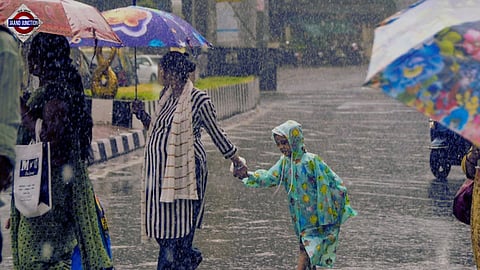

Mumbai and its neighbouring districts woke up to heavy showers on Wednesday, July 1, 2026.
With the showers persisting throughout the day, the India Meteorological Department (IMD) has issued fresh warnings on Wednesday for intense rainfall hitting the region, its people, daily commutes and city life.

On Wednesday, July 1, the IMD issued a red alert for Mumbai, Thane and Palghar, pointing to extremely heavy rain at isolated places. Meanwhile, surrounding areas are under orange alert for heavy to very heavy showers, thunderstorms, and gusty winds.
These alerts, based on IMD's weather forecast issued early on July 1, are active for the next few hours and extend into the coming days up to July 4 in some cases.
Although the warnings point to intense weather ahead, many in Mumbai and neighbouring regions would be looking out if the forecast comes to pass, as the city is one of the many regions in India that saw a delayed monsoon, and had to face severe water shortages.
But now, the current heavy spells are helping Mumbai's reservoirs, with water levels in seven key lakes rising from 6.75% to 7.18%.
After a delayed and drier-than-usual June, the monsoon is now intensifying over western India, including Konkan and Goa, with the overall monsoon season gaining momentum.
In the last 24 hours leading up to early July 1, several Mumbai areas received over 100 mm of rain, which triggered waterlogging in low-lying spots like the Andheri subway and parts of Navi Mumbai.
Local trains on Central and Western Railways faced delays, with the Harbour line briefly disrupted by a broken overhead wire.
Roads saw slower traffic due to reduced visibility and congestion.
The southwest monsoon, which arrived late in India and then even later to Mumbai, is now picking up pace.
Forecasts have also shown the potential arrival of monsoon over Delhi-NCR, Punjab and Haryana. These regions, too, will be looking forward to the rains to arrive, which will finally end the period of humid heat conditions that have persisted in the region.
IMD expects active rainfall to continue in early July, supporting farming, water supplies, and hydropower across the region while testing urban drainage.
