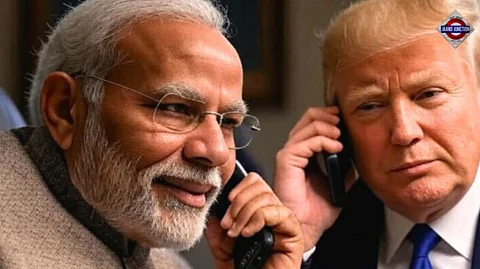

India has decided against rushing into an interim trade agreement with the United States, with the Narendra Modi government believing its bargaining position has strengthened amid improving economic conditions, expanding trade partnerships and reduced external risks, according to government officials and analysts.
Despite months of negotiations and expectations that an interim pact could be finalised during US Trade Representative Jamieson Greer’s visit to New Delhi last month, the two sides failed to reach an agreement after remaining divided on key issues.
According to Reuters, India refused to accept a deal that did not address its principal demands, including preferential tariff treatment over competing exporters such as China and assurances that Washington would not impose fresh tariffs after signing the agreement. Indian negotiators also remained firm on protecting politically sensitive sectors such as agriculture.
“Our position is clear—we don’t intend to rush into a deal that is not on favourable terms or compromise on red lines like ceding ground on agriculture," an Indian government official aware of the negotiations told Reuters.
The report says Washington had hoped to secure quick trade concessions from India before President Donald Trump’s proposed new tariffs come into force later this month. However, New Delhi has shown little urgency despite the possibility of higher duties on Indian exports.
A day after Greer’s visit, Commerce and Industry Minister Piyush Goyal also signalled India’s tougher stance, saying any agreement with the US would only move forward if it ensured an advantage for India.
Currently, most Indian exports to the US attract a 10 per cent tariff. However, the Trump administration is expected to introduce steeper tariffs later this month through investigations into excess industrial capacity. Separately, Washington has proposed additional tariffs of up to 12.5 per cent on several countries, including India, over allegations relating to goods made with forced labour—charges India has denied.
A US source familiar with the negotiations told Reuters that “the US view has been that India needs to earn the preferential treatment on trade provisions it has sought by making its own concessions".
While both sides remain engaged, officials indicated that a breakthrough is unlikely in the immediate future.
A US official, speaking on condition of anonymity, said Washington still expected an agreement but added that India had at times been “slow, bureaucratic and difficult" during the negotiations.
However, White House spokesman Kush Desai said: “The Trump administration continues to productively engage with Indian officials to finalise a historic trade deal that puts Americans and America First."
Trade analysts say India’s bargaining power has improved considerably over the past few months.
India’s goods exports rose around 15 per cent year-on-year during the April-June quarter despite disruptions caused by the Iran conflict, helped by stronger petroleum shipments. Exports to Gulf nations have recovered to pre-war levels, while shipments to the United States have also increased.
At the same time, India has expanded its trade options. The India-UK free trade agreement is expected to come into force this month, while negotiations on a trade pact with the European Union are progressing and could conclude early next year.
“Indian negotiators have gained some leverage in the talks, given its strong economy, diversification initiatives with other partners, and its strategic standing in the world," Wendy Cutler, senior vice-president at the Asia Society Policy Institute and a former US trade official, told Reuters.
India’s economic outlook has also improved after the interim US-Iran peace deal eased concerns over oil prices.
Goldman Sachs has raised India’s 2026 growth forecast to 6.8 per cent while lowering its inflation and current account deficit projections, suggesting the government has greater economic room to hold out for better terms.
Officials and analysts also believe India is calculating that some of the Trump administration’s proposed trade measures may face legal and political hurdles in the US.
A coalition of 22 Democratic state attorneys general has already challenged proposed tariffs linked to forced labour investigations.
Domestically, Prime Minister Narendra Modi’s recent electoral victories have further strengthened the government’s negotiating position, while BJP leaders have consistently argued that any trade agreement must protect Indian farmers and small businesses.
“India realises that delaying, or even abandoning, a rushed deal may be more prudent than locking into obligations whose costs could far exceed any temporary tariff relief," Ajay Srivastava, founder of the Global Trade Research Initiative and a former trade negotiator, told Reuters.

