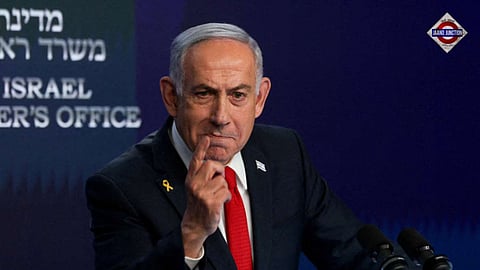

Israeli Prime Minister Benjamin Netanyahu has warned that Israel is prepared to strike Iran again if necessary, signalling that military action remains on the table even as Washington and Tehran continue efforts to finalise a peace framework aimed at ending months of regional escalation.
In his latest remarks, Netanyahu said Israel would act independently to prevent Iran from acquiring nuclear weapons and declared that another operation could follow if Israeli security demands are not met, Turkey’s state-run Anatolia Agency reported.
The agency quoted Netanyahu as speaking in an interview with Israel’s Channel 14, with him reiterating his government’s hardline position on Iran’s nuclear programme and defending previous military operations against Tehran.
"In Iran, we saved ourselves from atomic bombs," Netanyahu claimed, adding, "There will be a third time if necessary".
The warning comes at a delicate diplomatic moment as the US and Iran continue negotiations intended to transform a preliminary ceasefire framework into a broader political settlement.
The talks, being mediated by Qatar with regional coordination and international backing, are focused on ending hostilities, easing sanctions, addressing nuclear concerns and stabilising security arrangements across the Middle East.
The emerging US-Iran understanding follows months of military confrontation that intensified after coordinated US and Israeli operations against Iranian targets earlier this year triggered retaliatory attacks from Tehran and raised fears of a wider regional war.
According to details released around the proposed framework, Washington and Tehran have agreed in principle to pursue a phased de-escalation process.
The draft memorandum includes commitments to halt military action, reopen the Strait of Hormuz, negotiate sanctions relief and establish mechanisms to address Iran’s nuclear activities.
Iran has reiterated within the framework that it will not develop nuclear weapons, while broader technical negotiations continue.
However, Israel has repeatedly signalled that it does not consider itself bound by any agreement that, in its view, leaves Iranian military or nuclear capabilities intact.
US President Donald Trump has publicly urged restraint and warned against renewed escalation.
According to comments made to Axios, Trump cautioned Netanyahu that additional large-scale strikes could leave Israel diplomatically isolated and undermine ongoing negotiations.
"I said, 'Bibi, you better be careful, or you will be on your own very soon,'" Trump said.
Trump has argued that diplomacy remains the best route to prevent another regional conflict and reportedly pressed Israel to avoid actions that could derail a final agreement with Tehran.
US officials have said Washington attempted to balance support for Israeli security concerns while preventing a broader confrontation.
Despite those efforts, tensions remain high. After Israeli strikes linked to Hezbollah positions in Beirut, Iran responded with missile launches toward Israel, prompting Israeli retaliatory operations against targets inside Iran.
The US did not directly participate in those attacks but assisted Israel’s air defence operations.
Netanyahu has continued to defend the military campaign, claiming Israeli operations significantly weakened both Iran and Hezbollah while delaying what he described as an immediate nuclear threat.
Against that backdrop, Netanyahu on Tuesday visited Israeli-held areas in southern Lebanon and vowed that Israeli forces would remain in place despite recent security understandings with Beirut.
"Our insistence is that we will not leave southern Lebanon until the threat is removed," Netanyahu told Israeli troops.
"And as long as Hezbollah remains here, armed and threatening us, we will remain here as well," he said.
The visit marked Netanyahu’s first trip to occupied Lebanese territory since a US-backed security arrangement proposed limited Israeli withdrawal from designated areas and expanded Lebanese military control.
With Washington and Tehran pushing to convert the current framework into a binding agreement and Israel maintaining its right to unilateral military action, the coming weeks are likely to determine whether diplomacy can hold or whether the region moves back toward confrontation.

