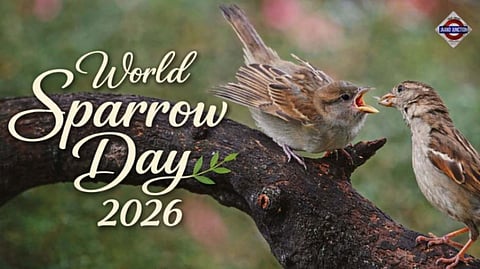

World Sparrow Day 2026 will be observed on March 20, and the official World Sparrow Day website continues to promote the campaign under the message "I Love Sparrows." World Sparrow Day was established by the Nature Forever Society of India, founded by Mohammed Dilawar to raise awareness about the decreasing sparrow population and the general reduction of common city bird species. The first World Sparrow Day was celebrated in 2010 and has since become a global movement dedicated to bird conservation.
Sparrows, which once inhabited domestic spaces and outdoor areas and commercial districts, have disappeared from most urban areas. The conservation organisations and governmental studies have established urban development and destruction of bird nesting habitats and environmental contamination and pesticide application and sound pollution and automobile emissions as the causes of the bird population decline. The environmental crisis extends beyond a single bird species because it affects the whole ecosystem that sparrows inhabit with humans.
World Sparrow Day becomes important through the message that it delivers. The program seeks to motivate people through their present feelings by making them take concrete steps to protect common species of wildlife that they encounter in their daily lives. The initiative has now spread to more than 50 countries, and in India it gained additional visibility after the house sparrow was declared the state bird of Delhi in 2012.
The ecological significance of sparrows extends beyond their actual physical dimensions. Government material notes that they help control insect populations and also contribute to pollination and seed dispersal, which supports biodiversity in both rural and urban ecosystems. The role of sparrows in maintaining environmental balance brings health benefits to all shared ecosystems.
The World Sparrow Day conservation message retains its importance for 2026 because it remains relevant to current environmental needs. The official campaign highlights simple, low-cost steps such as creating nesting spaces and supporting bird feeders and water bowls and making urban areas more bird-friendly. The ongoing upward and outward growth of cities creates additional space for sparrows and other common birds through every habitat-friendly choice that people make.
World Sparrow Day serves as a reminder that conservation efforts extend beyond their initial starting point in forests and national parks. The practice of conservation begins with domestic spaces and extends to balcony areas and school playgrounds and residential neighborhoods that serve as habitats for local bird populations. The protection of sparrows leads to the preservation of natural elements that used to bring vitality to human communities.

