
Israel's October Reckoning
As Netanyahu pushes for one more term, a transformed Middle East and growing relationship with India await their reckoning.
On October 27, The Israeli public will cast their votes for the first time in four years, marking a significant milestone - the first Knesset since 1988 to complete its full term without the government collapsing inbetween. This should give you a great overview to the durability and shrewd political consciousness of Benjamin Netanyahu, whose current government has managed to live through in a way that Israeli coalitions often don't but not without its fair share of fights and disagreements specially between Ben gvir and other members of the coalition. Now, the country will have to decide whether his government deserves another term in office. The fact that Netanyahu's government has lasted this long says a lot about his leadership, and can he somehow against all odds get another term in the office . The outcome of the election will have a significant impact on not just the country's future but the whole region as well which stands on a brink ,and it's up to the people of Israel to decide what's best for them.
Benjamin Netanyahu has had a long and complex career not just as Israel's prime minister but also its ambassador to the United nation before that. He first took the job in 1996, then came back in 2009 and administrated for a while, making him the leader who served the country for the longest time. But in 2021, he was voted out of office due to multiple factors, major one being anti-incumbency. Just a year later, in December 2022, he returned as the head of a new coalition that was more religious and nationalist than any the country had seen before. This group has been in charge during some rough periods, including a big change in the judicial system that divided the country saw huge street protests, a surprise attack on October 7th that was termed as an intelligence failure of catastrophic levels, two years of fighting in, and a showdown with Iran that has changed the whole region. Not many prime ministers have had to make so many legacy decisions in such a short period of time. But at the same time, Netanyahu himself becomes a less certain and more tainted figure, if one thinks about the sources of his rule and what he can be remembered for. The return to power was controversial and problematic for him, and it is still not clear what his new term will bring for the country and his party.
A Career on Trial
There are two big issues that affect everything . First, there's a personal matter involving Netanyahu. He's on trial for some serious charges - bribery, fraud, and breach of trust. This is a big deal because he's the first Israeli leader to be prosecuted while still in office. Netanyahu has already given his testimony, which took 98 hearings from December 2024 to June this year and saw many delays due to inaccessibility of the prime minister owing to national security matters. Now, the case is moving to the final arguments before the judges make a decision. So far, no verdict has been reached, and Netanyahu denies any wrongdoing, calling the whole thing a political witch hunt. Meanwhile, Donald Trump has openly supported Netanyahu in the past , asking Israel's president to pardon him or just cancel the trial. The opposition has criticised this by stating that Trump's involvement is inappropriate and interferes with Israel's justice system, while supporters see it as a show of support for a leader during difficult times.
For many Israelis, the events of October 7th are still traumatic and the wounds have not fully healed yet. Whether it's fair or not, the security failure and the corruption trial have become linked in the public's mind, and for a lot of people, it's all about Netanyahu's personal character. That's why this election is being seen as a referendum on the man himself, rather than a choice between different parties and ideologies; it's not just about the policies, but about what people think of Netanyahu and his actions that have reshaped the whole region.
A Fractured Field
The latest opinion polls were not good news for Prime Minister Netanyahu; his Likud party could end up with between 18 and 27 seats compared with 32 seats in2022. The new party led by Gadi Eisenkot, former head of the Israeli military, is set to become the leading party in many polls. Naftali Bennett, another former prime minister, does well with his party. The problem for both camps is that neither has the majority needed to form a government without the support of the Arab parties. And that's a problem, because many Zionist conservative parties in both coalitions still refuse to work with the Arab parties. So, it's likely that we'll see a lot of uncertainty and negotiation after the election, as different parties try to form a coalition government.
A recent poll showed that only about a third of Israelis think Netanyahu should stay on as prime minister, but among his supporters, a whopping 82% want him to stay. What's really interesting, though, is that 62% of people are worried about how the rest of the world sees Israel and that might be the most important thing to consider when thinking about what this government will be remembered for. Israel's global standing is in a rapid decline even its allies in the west have condemned their actions in Palestine and have called for a peaceful resolution making the image of an isolated Israel even stronger among the general public.
The Region Netanyahu Leaves Behind
The situation in the Middle East is more complex than just what's happening in Gaza. A lot has changed recently. On February 28, Israel and the US decided to launch joint preemptive strikes on Iran after talks about nuclear issues fell apart. The first wave of attacks killed Iran's Supreme Leader, Ali Khamenei, which set a new precedent in the Middle East. This led to 40 days of war, with attacks on all major American bases and economic infrastructure of GCC countries. Hezbollah also got involved in the conflict before a ceasefire was put in place on April 8. However, the ceasefire hasn't been holding well; a reported truce fell apart in June, and by September, the US and Iran were exchanging strikes again, which some analysts are calling a war of attrition. The Israeli government says the goal of the campaign is to remove a major nuclear threat and a possible regime change, but some foreign governments and critics think killing a head of state is an illegal escalation, no matter what the reason. How the next Israeli government handles this situation will be closely watched by other countries. The way they deal with it will have a big impact on how they are perceived abroad.
The humanitarian crisis in Palestine is growing rapidly, increasing the pressure on Israel by international organisations and countries. There was a ceasefire agreement made in September 2025, under a plan proposed by Donald Trump, and it has mostly held up since October. All the hostages have been found and the last body was returned in January. But the harder part of the plan, which involves disarming Hamas, setting up a new government, and paying for reconstruction, has been stuck for months. Both sides have also been breaking the truce in small ways. The next leader of Israel will have to deal with this unfinished slug fest, along with developments surrounding Iran . The situation in Gaza is complicated by the fact that the territory is war-torn and requires urgent help and assistance. This further complicates an already difficult situation, as the new government will have to take into account a lot of details and treat different groups of residents differently. Therefore, it will be very challenging for the new authorities, but a successful result is possible.
The View From New Delhi
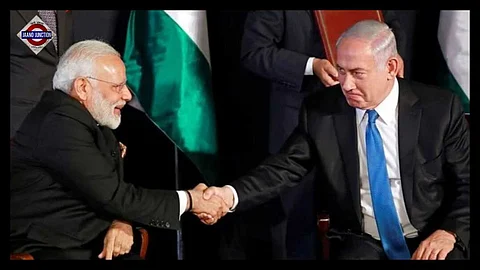
India's connection with Israel is getting stronger. When Narendra Modi visited Israel in February, it was his first time in nine years. This trip made the relationship even stronger, and got a new shiny term "Special Strategic Partnership for Peace, Innovation and Prosperity". We had already agreed to work together on defense in November, and we started talking about a free trade deal as well with Israel. We also made new agreements on artificial intelligence and digital payments. Even though the leaders seem to get along very well Netanyahu calls Modi a brother - the real importance is in the structural changes they're making, like trade and defense agreements, which will last even after they're gone. Such partnerships bear an everlasting outcome irrespective of the ruling dispensation. India and Israel have set up a deep-rooted relationship that would be fruitful for the time to come. Elaborating on the subject, the author mentions that the bonding was believed to be good for both the countries, but the actual scenario was quite different. When Mr. Modi visited Israel, the timing of the visit had become a sensitive matter in India. The controversial war was under a global scanner as well as Israel was getting involved with other nations too. India has its own agenda to develop relations with Iran and the Gulf countries; they have invested in Chabahar port in Iran despite growing ties with Israel. The given article sheds light on the complex situation and gives a detailed description of the everlasting bond between the two countries, but it seems that it hardly matters who would win the election in India on October 27.
Whether it's a government led by Eisenkot or a re-elected Netanyahu, India's interests remain the same - it's not about the person, but about what Israel can offer a country trying to navigate a volatile region. India's goal is to protect its own interests, and it will continue to do so by maintaining relationships with multiple countries, including Israel, Iran, and the Gulf states. This approach allows India to hedge its bets and ensure its own stability in a rapidly changing world.
If you're watching from outside Israel. It will settle Netanyahu's personal fate, and it might start to heal, or deepen, years of bitter polarisation inside Israeli politics. What it won't settle is the shape of the region this government leaves behind: a Middle East where the old deterrence order built around Iran is in ruins, where Gaza's future is still unwritten, and where whoever governs Israel next simply inherits both, ready or not.
Views expressed in Citizen Junction stories are that of the author and solely of the author, submitted to Jaano Junction through WRITE. Start writing on Jaano Junction to get your opinion published. Click Here to start your citizen journalism journey.
