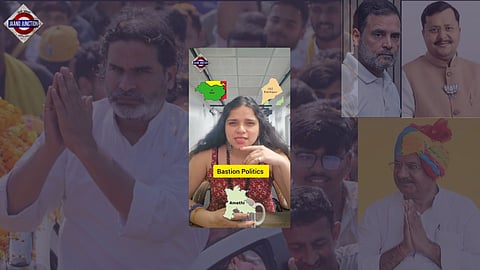

Indian politics has always had its "bastion seats", constituencies where one party or one leader's influence seemed almost unshakeable. But the recent bypolls in Datia and Bankipur suggest that this political equation is changing.
Datia, long associated with senior BJP leader Narottam Mishra, has been one of the party's most prominent political centres in Madhya Pradesh. Although Mishra lost the seat in the 2023 Assembly elections, the constituency continued to be viewed as a BJP stronghold because of his decades-long influence. However, in the recent bypoll, Congress candidate Ghanshyam Singh defeated BJP's Ashutosh Tiwari, allowing the Congress to retain the seat and reinforcing the message that political legacy alone is no guarantee of victory.
The bigger upset came from Bankipur in Bihar. A BJP bastion since 1995, the seat fell vacant after Nitin Nabin moved to the Rajya Sabha. In his electoral debut, Jan Suraaj founder Prashant Kishor defeated BJP candidate Neeraj Kumar, ending the party's nearly three-decade dominance in the constituency.
These results are significant not simply because of who won or lost, but because they underline a broader shift in Indian electoral politics. Voters appear increasingly willing to look beyond party symbols and established political legacies, placing greater emphasis on local leadership, credibility and public connect.
The comparison with Amethi in 2019 is symbolic. That election challenged the notion that any constituency could remain permanently loyal to a single leader or party. The outcomes in Datia and Bankipur reinforce the same message: political bastions are becoming increasingly vulnerable in an era where performance and grassroots connect matter more than history.
Whether this is the beginning of a long-term electoral trend remains to be seen. But one thing is clear—Indian voters are redefining the idea of a "safe seat," and no political fortress can afford to take its electorate for granted anymore.
