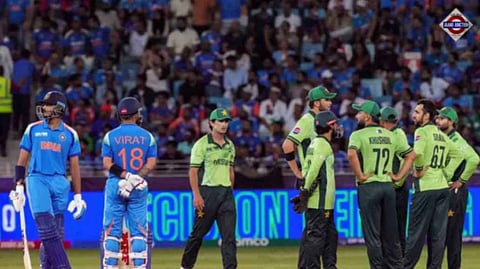

In a dramatic (read expected) resolution to a standoff that threatened to overshadow the 2026 ICC Men’s T20 World Cup, Pakistan has made a U-turn on their decision to boycott their scheduled Group A match against India in Colombo on February 15. The Government of Pakistan announced late on Monday that it had reversed its earlier directive and would “take the field" against India, following a series of high-level discussions with the International Cricket Council (ICC), cricket boards from Bangladesh and Sri Lanka, and appeals from “friendly nations".
India Vs Pakistan – the tournament’s marquee fixture, one of the most watched sporting events globally – was thrown into uncertainty after PCB’s initial insistence on forfeiting the match, which would have cost them two points and potentially hurt their chances of advancing to the next stage.
Bangladesh’s Exit And Pakistan’s Protest
The row began in January when the Bangladesh Cricket Board (BCB) refused to travel to India for group matches, citing security concerns. This came after IPL franchise Kolkata Knight Riders (KKR) released their Bangladeshi fast bowler Mustafizur Rahman on BCCI’s instructions. Despite ICC’s reassurance that there’s no credible threat, BCB remained adamant on their request to shift matches to Colombo following which Bangladesh were replaced with Scotland in the tournament, a move that drew sharp criticism from PCB.
Bangladesh’s exclusion, unprecedented for a Full Member nation, was perceived in Islamabad as unfair and symptomatic of “double standards", with Pakistan voicing robust support for Dhaka.
There were reports PCB is mulling over withdrawing from the event itself. Then in early February, the Pakistan government granted its men’s team permission to participate in the T20 World Cup but barred them from taking the field against India as a protest and show of solidarity with Bangladesh, putting the high-voltage India-Pakistan clash at risk.
Diplomacy, Cricket And Commercial Stakes
The crisis quickly escalated beyond sport. The ICC publicly criticised Pakistan’s boycott decision, saying it “undermines the spirit and sanctity" of international competition, and urged a resolution. At the same time, cricket boards from Bangladesh and Sri Lanka pressed Pakistan to reconsider. Sri Lanka Cricket reportedly reminded PCB how they extended help to them in the past besides the financial ramifications.
BCB President Aminul Islam travelled to Lahore to engage with Pakistan’s cricket leadership, imploring them to honour the fixture “for the benefit of the entire cricket ecosystem".
Adding to the urgency was the financial dimension: the India-Pakistan clash represents the richest broadcasting draw in world cricket, underpinning lucrative deals worth hundreds of millions of dollars. Broadcasters and host organisers warned of significant commercial losses if the match was cancelled.
Backtrack And Resolution
Under mounting bilateral and multilateral pressure – notably from the ICC, Bangladesh, Sri Lanka and other cricketing partners – Pakistan’s cricket leadership returned to Prime Minister Shehbaz Sharif with fresh recommendations, prompting an abrupt policy reversal.
In its statement announcing the reversal, the Government of Pakistan cited the “outcomes achieved in multilateral discussions" and appeals from friendly countries as key reasons for allowing its side to compete against India as scheduled.
What Bangladesh Gained From The Saga?
For BCB, the episode ultimately translated into quiet but tangible diplomatic gains. After being sidelined from the tournament following its refusal to travel to India, the Bangladesh Cricket Board emerged with fresh assurances from the ICC that it would not face long-term punitive consequences for their refusal to travel to India for the tournament.
According to officials familiar with the discussions, the ICC reaffirmed Bangladesh’s status as a trusted Full Member and signalled support for awarding the country hosting rights for a future global event – a key demand raised by Dhaka during negotiations.
The episode may have elevated Bangladesh’s standing within regional cricket diplomacy, with its leadership playing a central mediating role between Pakistan, the ICC and other boards. While Bangladesh did not return to the tournament, the crisis allowed it to convert a security-driven withdrawal into leverage, reinforcing its voice in ICC decision-making.
Broader Implications For Cricket And Regional Ties
The episode underscores how political tensions can spill over into sport, especially in South Asia where cricket occupies enormous cultural and diplomatic space. The initial boycott illustrated how national sentiment and regional alliances can shape sporting decisions, even in high-profile ICC events.
For Pakistan, changing its stance may preserve tournament integrity and avert contractual and financial fallout, but it also highlights the complex position in which cricket administrators find themselves – balancing political solidarity with commercial realities and global expectations.
For the ICC and its members, the episode has opened fresh debate about consistency in governance and how to address security concerns across member nations, a challenge that may shape future tournament arrangements.
With the India-Pakistan group match now reinstated, tournament organisers will aim to ensure the World Cup’s competitive narrative proceeds without further disruption. Both teams are already in Colombo preparing for what remains one of the most eagerly anticipated fixtures in cricket.
