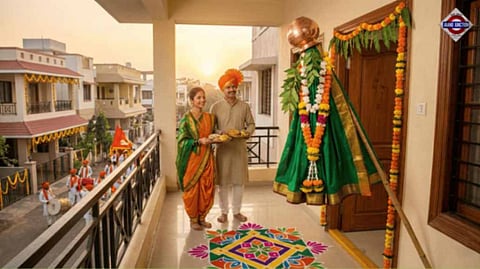

Gudi Padwa marks the traditional Marathi and Konkani Hindu New Year, celebrated with deep cultural, spiritual, and seasonal significance. It falls on the first day of the Chaitra month in the lunisolar Hindu calendar, typically March-April, symbolizing renewal, victory, and the onset of spring. The Gudi Padwa 2026 meaning reflects new beginnings, prosperity, and seasonal renewal, highlighting the Gudi Padwa importance in Hinduism as a sacred start to the year.
Gudi Padwa occurs on the Pratipada (first day) of the bright fortnight of Chaitra. The Gudi Padwa 2026 date and time place the festival on March 19, aligning with Ugadi in other regions. Gudi Padwa also coincides with the harvest of rabi crops, blending agricultural joy with spiritual observances. Families across Maharashtra celebrate by hoisting vibrant Gudi flags on rooftops, symbolizing victory and prosperity.
The history of Gudi Padwa festival is deeply rooted in mythology and tradition. Legends trace its origins to Lord Brahma creating the universe and initiating time on this day, establishing it as a cosmic new beginning. It also commemorates Lord Rama’s return to Ayodhya after vanquishing Ravana, with the Gudi representing his victory flag. Historical ties link it to Chhatrapati Shivaji Maharaj hoisting a Gudi after his coronation, reinforcing themes of triumph and sovereignty.
The Gudi Padwa significance reflects the triumph of good over evil, prosperity over adversity, and life’s bittersweet balance with sweetness from sugar crystals and bitterness from neem leaves. Worship of Lord Vishnu, Brahma, and Lakshmi invokes abundance, while seasonal renewal mirrors nature’s cycle of growth. Traditional feasts feature puran poli and Aamras, bringing communities together in shared joy and gratitude.
The Gudi (victory flag) is central to Gudi Padwa celebration in Maharashtra. It consists of a 4-5 foot bamboo pole draped with bright silk cloth (yellow, red, or green), garlanded with mango and neem leaves, flowers, sugar crystals (Gathi), and topped with an inverted silver or copper kalash (pot). Rangoli at entrances welcomes positivity, and oil baths purify the body for the new year.
Preparations start with early morning baths using Ubtan (herbal paste of turmeric, sandalwood, and milk). Families clean homes, draw rangoli, and set up a puja thali with kumkum, haldi, rice, flowers, diya, incense, and fruits. Hoisting the Gudi occurs at the right side of the main entrance or balcony, accompanied by drumming and cheers to amplify victory energies.
The Gudi Padwa rituals and traditions include:
Invoking Lord Brahma or Vishnu with mantras and havan (fire offerings).
Aarti with ghee lamp, camphor, and bhajans.
Consuming neem-jaggery chutney to embrace life’s dualities, followed by prasad distribution.
Street processions, folk dances like Lavani, and community feasts foster unity.
Gudi Padwa traditional foods play an important role in festive celebrations.
Festive meals feature:
Puran Poli (sweet stuffed flatbread with lentils and jaggery).
Shrikhand (saffron yogurt), Aamras (mango puree).
Puris, sabudana khichdi, and kanola (poha with jaggery).
Regional sweets like modak and karanji.
These dishes highlight seasonal produce, sweetness for joy, and wholesomeness for health.
Gudi Padwa celebration in Maharashtra is vibrant and deeply cultural. The festival is primarily observed in Maharashtra, Goa, and parts of Karnataka. It mirrors the Ugadi festival celebrated in Andhra Pradesh and Telangana, where the famous Ugadi pachadi symbolizes the different flavors of life. In urban areas, eco-friendly Gudis use cloth over plastic, and virtual gatherings blend tradition with modernity. Street processions and rangoli competitions add vibrant public energy, drawing locals and tourists alike.
Today, Gudi Padwa 2026 continues to blend tradition with modern lifestyle. Families don traditional attire, with women in nine-yard sarees (nauvari) and men in dhotis. Stock market openings and new business launches capitalize on its auspiciousness. Cultural programs include tamasha performances and rangoli contests. Amid climate awareness, sustainable practices like reusable kalash gain traction.
The Gudi Padwa significance extends beyond rituals. It promotes family bonding, gratitude for harvests, and resolutions for prosperity. It teaches resilience through neem’s bitterness and optimism via spring’s bloom. The Gudi Padwa importance in Hinduism is reflected in how the festival connects spirituality, agriculture, and cultural heritage. Visitors can join temple aartis at Siddhivinayak or explore Kolhapur’s rangoli trails for an immersive cultural experience. Wellness enthusiasts often incorporate the festival’s sattvic meals into detox routines, blending ancient wisdom with modern health trends.
