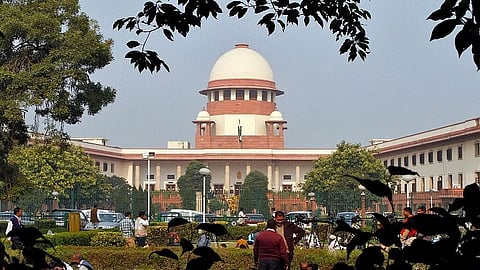

The Supreme Court on Thursday slammed the freebies culture ahead of the elections and said that it was high time to revisit such policies, as it hampers the country’s economic development. Further coming down heavily on the Tamil Nadu government in view of the distribution of ‘freebies’ before elections, the apex court questioned, “What kind of culture are you trying to cultivate?"
The top court’s comments came in regard to the Tamil Nadu Power Distribution Corporation Ltd’s plea, which proposed to provide free electricity to all, irrespective of the financial status of consumers.
A bench comprising Chief Justice Surya Kant and Justices Joymalya Bagchi and Vipul M Pancholi emphasised that while it is the state’s responsibility is to empower its people, giving out freebies from morning to night is not the way to build the nation. Most states are already running a revenue deficit, and such policies only exacerbate the situation, leaving no funds for development.
“Most of the states in the country are revenue-deficient states, and yet they are offering such freebies, overlooking development," the Bench said.
The bench said economic development of the nation gets hampered with this kind of largesse distribution and states should work to open avenues for employment instead of giving free food, cycles, electricity to all.
Following this, the Supreme Court issued a notice to the Centre and others on the plea of the DMK government-led power distribution firm, which proposes to provide free electricity. The power firm has challenged a rule of the Electricity Amendment Rules, 2024.
“What kind of culture are we developing in India? It is understandable that as part of the welfare measure, you want to provide to those who are incapable of paying the electricity charges. But without drawing a distinction between those who can afford and those who cannot, you start distributing. Will it not amount to an appeasing policy," CJI Surya Kant asked.
The Bench further raised questions on the sudden decision of the Tamil Nadu power firm to provide free electricity.
“The states should work to open avenues for employment. If you start giving free food from morning to evening, then free cycle, then free electricity, then who will work and then what will happen to the work culture," the CJI said.
The bench said states, instead of spending on development projects, do two jobs – paying salaries and distributing such largesse.
