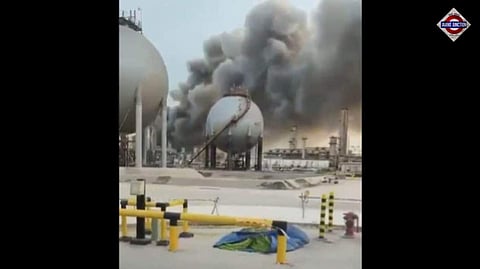

Saudi Arabia’s Ras Tanura refinery, the world’s largest oil refining facility, has been struck by drones, causing a major fire and forcing authorities to halt operations temporarily. The refinery, operated by Saudi Aramco, produces over 550,000 barrels of crude oil per day and serves as a critical hub for the kingdom’s oil exports.
According to sources, the drones responsible for the strike originated from Iran.
Saudi Aramco authorities are currently assessing the full extent of the damage, with operations at the site suspended until further notice. No official statement has yet been released by the company or the Saudi government regarding casualties or the broader impact on oil exports.
Top government and security officials warn that this incident demonstrates how quickly the ongoing Middle East conflict is spreading to strategic energy infrastructure. Analysts suggest that the attack reflects Tehran’s willingness to target economic chokepoints in retaliation for recent airstrikes, raising concerns about potential escalation in the region.
“This is a significant development that could provoke further military responses from the US, Israel, or Saudi-led coalitions," said one top government source, emphasising the geopolitical sensitivity of the strike.
The Ras Tanura facility is not only vital for global oil supply but also a symbol of Saudi Arabia’s energy dominance, and attacks on it could have wider implications for global energy markets.
The strike comes at a particularly tense moment for global oil markets. Crude prices have surged to levels not seen in four years, as the escalating conflict involving Iran has effectively disrupted shipping through the Strait of Hormuz, the vital chokepoint that channels nearly 20 per cent of the world’s daily oil shipments. While Tehran has not officially closed the passage, many shipping companies have halted transit over safety concerns, creating an informal blockade in one of the planet’s most important energy corridors.
Markets are now bracing for extended volatility. Any prolonged disruption to Gulf oil exports, especially if the Strait of Hormuz remains off-limits, could tighten global supply just as demand is rising, heightening the risk of renewed inflationary pressures. In early trading, Brent crude surged to $80 a barrel, reflecting concerns over potential supply shortfalls from the Gulf region.
