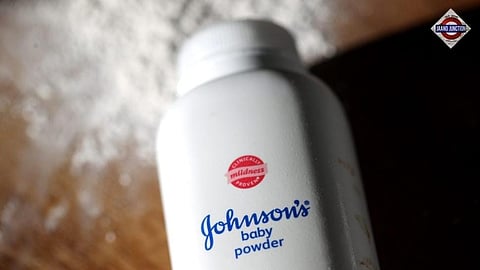

Johnson & Johnson (J&J) has agreed to a proposed $5.5 billion settlement to resolve approximately 76,000 lawsuits in the United States alleging that its talc-based baby powder and related products caused ovarian cancer. If approved by enough claimants, the agreement could bring to a close one of the largest and longest-running product liability disputes in US corporate history.
The proposed settlement, first reported by Reuters, applies to nearly all pending ovarian cancer claims filed against the company in federal and state courts across the country.
The agreement will take effect only if at least 95% of eligible claimants accept its terms. According to Johnson & Johnson, the company expects to pay around $3 billion in 2027, with the remaining payments scheduled for 2028. However, the total payout could increase depending on the number of claimants who opt into the settlement.
Chris Seeger, one of the lead attorneys representing thousands of plaintiffs, told Reuters that the final amount could exceed $7 billion if participation is higher than anticipated.Johnson & Johnson has consistently denied that its talc-based products cause ovarian cancer or contain asbestos. The company said it agreed to the settlement to end years of costly litigation rather than because it believes the claims have merit.
"We are confident the company would have ultimately prevailed with further litigation," Erik Haas, J&J's Vice President of Litigation, said, adding that the settlement would allow the company to focus on developing medicines and medical devices.
The lawsuits alleged that women developed ovarian cancer after prolonged use of Johnson & Johnson's talc-based baby powder and similar products.
Many plaintiffs also claimed that the products contained asbestos, a substance known to increase the risk of certain cancers.
Johnson & Johnson has repeatedly rejected both allegations, maintaining that decades of scientific research support the safety of its products.
The company discontinued sales of its talc-based Johnson's Baby Powder in the United States in 2020, replacing it with a cornstarch-based version.
If approved, the agreement would resolve nearly all existing ovarian cancer lawsuits against Johnson & Johnson. However, it applies only to current claims and does not prevent individuals from filing future lawsuits.
The proposed settlement follows more than a decade of litigation that included jury trials, appeals and multiple legal challenges. During the course of the litigation, Johnson & Johnson secured several courtroom victories, including favourable verdicts in individual cases and rulings limiting some of the scientific evidence plaintiffs could present.
Reuters also reported that a federal judge recently questioned whether individual plaintiffs would be able to prove that talc specifically caused their ovarian cancer.
Johnson & Johnson previously attempted to resolve the litigation through a controversial legal strategy known as the "Texas two-step." Under this approach, the company created a subsidiary that filed for bankruptcy in an effort to consolidate and settle all talc-related claims.
The strategy drew criticism from plaintiffs, who argued that the company was using bankruptcy protections to limit its legal liability despite its financial strength.US courts ultimately dismissed all three bankruptcy filings, allowing the lawsuits to continue.
The proposed settlement will now be circulated among eligible claimants for approval.
If at least 95% of the approximately 76,000 plaintiffs accept the agreement, Johnson & Johnson could bring an end to one of the largest product liability cases in US history. If that threshold is not met, the company may continue to face litigation in courts across the United States.
Sources: India Today
