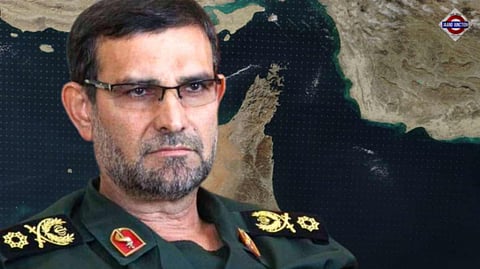

Alireza Tangsiri, the head of the Islamic Revolutionary Guard Corps (IRGC) Navy, was killed in a strike in Bandar Abbas, a key Iranian port city located near the Strait of Hormuz, an Israeli official told The Jerusalem Post on Thursday.
The reported strike near one of the world’s most critical maritime chokepoints comes as tensions escalate across the Middle East amid the ongoing conflict involving Iran, Israel and the United States.
Bandar Abbas lies adjacent to the Strait of Hormuz, a strategic passage linking the Persian Gulf to global shipping routes and carrying roughly 20 per cent of the world’s traded oil and natural gas in peacetime.
The reported killing of Tangsiri marks a significant development in the conflict, particularly given the IRGC Navy’s central role in Iran’s maritime operations and its strategic posture in the Gulf.
IRAN MOVES TO FORMALISE CONTROL OVER KEY WATERWAY
Iran has been tightening its grip over the Strait of Hormuz, with Tehran moving to formalise control over the vital shipping corridor as diplomatic efforts toward a ceasefire appear to falter.
Industry experts cited by AP said Iran is implementing a “de facto ‘toll booth’ regime," under which certain vessels are required to provide cargo manifests, crew details and destination information to Iran’s Revolutionary Guard for geopolitical vetting.
The shipping intelligence firm Lloyd’s List Intelligence described the arrangement as a “de facto ‘toll booth’ regime," adding that at least two ships have reportedly paid fees in Chinese yuan to pass through the strait.
Iranian lawmaker Mohammadreza Rezaei Kouchi, quoted by Fars and Tasnim news agencies, said parliament is working to formalise the fee structure.
“We provide its security, and it is natural that ships and oil tankers should pay such fees," he said.
Iran’s control over the strait has heightened fears of disruptions to global energy markets, with Brent crude trading at $104 on Thursday, up more than 40 per cent since the conflict began.
AP reported that the United States is reinforcing its military posture in the region, with a strike group led by the amphibious assault ship USS Tripoli moving closer to the Middle East carrying approximately 2,500 Marines.
Additionally, at least 1,000 paratroopers from the 82nd Airborne Division have been ordered to deploy to the region.
While the troop movements do not necessarily indicate imminent ground operations, AP reported they could be used to compel Iran to reopen the Strait of Hormuz or halt attacks on Gulf Arab states.
US Navy Admiral Brad Cooper said American forces have struck more than 10,000 targets since Israel and the US began operations on February 28.
“We’re not done yet," Cooper said in a video message.
“We are on a path to eliminate Iran’s wider military apparatus."
AP reported that sirens sounded across parts of Israel, warning of incoming Iranian missiles, with explosions heard in Tel Aviv and Jerusalem.
Rescue workers said two people were injured in a blast in Kfar Qasim.
In the United Arab Emirates, two people were killed and three wounded by falling shrapnel following a missile interception over Abu Dhabi, according to AP.
Saudi Arabia’s Defence Ministry said it intercepted multiple drones over its Eastern Province, while Bahrain reported extinguishing a blaze near a residential area close to Bahrain International Airport.
Israel said it carried out strikes targeting Iranian infrastructure, including sites near Isfahan, a city that hosts key military facilities and had previously been targeted during the earlier 12-day war between Israel and Iran in June, AP reported.
CEASEFIRE EFFORTS REMAIN UNCERTAIN
According to AP, the United States has conveyed a 15-point ceasefire proposal to Iran via Pakistan, including provisions related to reopening the Strait of Hormuz.
US President Donald Trump said Tehran wants to reach an agreement.
“They are negotiating, by the way, and they want to make a deal so badly, but they’re afraid to say it because they figure they’ll be killed by their own people," Trump said at a fundraiser.
However, Iranian Foreign Minister Abbas Araghchi said Tehran has not engaged in negotiations.
Iran’s English-language broadcaster Press TV said Tehran has proposed a five-point plan that includes asserting “sovereignty over the Strait of Hormuz."
