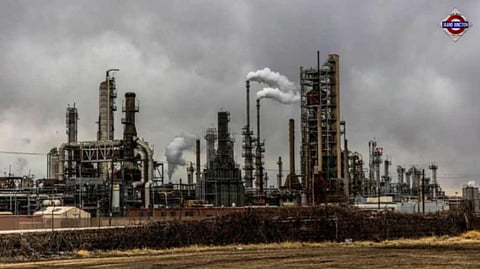

The Government of India has invoked the Essential Commodities Act (ECA), 1955, effective March 2026, to address potential energy supply disruptions caused by raging war in West Asia after Israel and the US attacked Iran on Feb 28. The Ministry of Petroleum and Natural Gas has issued specific directives to regulate the production and distribution of Liquefied Petroleum Gas (LPG) and natural gas to ensure their availability for domestic and critical sectors. This simply means the oil refining companies have been ordered to maximise production of LPG and make it available to domestic consumers only. The order invokes clauses 3 and 5 of the ECA which also set supply limits for Oil Marketing Companies (OMCs).
The Essential Commodities Act (ECA), 1955 is a central legislation designed to ensure the delivery of specific goods whose supply, if obstructed by hoarding or black marketing or any other external factor. In 2020, the Indian Parliament amended the Act, restricting the Centre’s authority to regulate cereals, pulses, potatoes, onions, edible oilseeds and oils only during situations like war, famine, or severe natural calamities. The Act empowers the government to regulate the production, supply, distribution, and pricing of these commodities to ensure they are available to consumers at fair prices in crucial times as well. The Central Government can add or remove items from the "Schedule" of the Act based on public interest. Since 2020, the Centre has invoked the ECA five times citing the need to control food prices and safeguard domestic supply.
As the Act has been invoked now, all oil refining companies must maximise production of LPG using available propane and butane streams. Refiners are prohibited from diverting propane or butane for manufacturing petrochemical products or other downstream derivatives. Public sector OMCs — IOCL, HPCL, and BPCL— must supply the procured LPG exclusively to domestic households. A new Natural Gas (Supply Regulation) Order, 2026 prioritises gas allocation to domestic PNG, CNG, and fertiliser plants. To prevent hoarding, government has mandated a 25-days window for fresh cylinder bookings.
