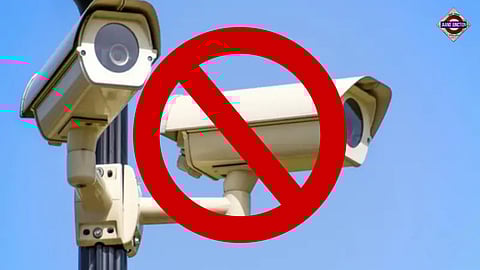

India is reportedly preparing to bar Chinese video surveillance giants such as Hikvision, Dahua, and TP-Link from selling internet-connected CCTV cameras and related hardware from April 1. This comes as starting next month, the new certification rules under the Standardisation Testing and Quality Certification (STQC) rule will take effect, making approval mandatory before CCTV products can be sold in India. Do note that these rules apply to all brands offering CCTV cameras and video surveillance products in India.
According to a report by The Economic Times, citing industry executives, the move is part of a broader government push to tighten security standards for connected devices. Authorities are reportedly refusing to grant certification to products from these firms, as well as any devices using Chinese-origin chipsets. Without STQC clearance, such products are effectively barred from the Indian market.
The ban will bring in a significant blow to Chinese brands, which once dominated the sector in the country. As recently as last year, the Chinese brands accounted for roughly a third of all CCTV sales in the country. However, the landscape has shifted rapidly as domestic manufacturers have stepped in to fill the void.
In the meantime, Indian brands like CP Plus, Qubo, Prama, Matrix, and Sparsh have expanded aggressively. These brands have reworked their supply chains to rely on non-Chinese components, favouring Taiwanese chipsets, and have localised their firmware. According to Counterpoint Research, Indian players now control over 80 per cent of the market as of February, while the premium segment remains the stronghold of multinationals like Bosch and Honeywell.
Indian CCTV makers, obviously and for business reasons, are likely to welcome the government move. Qubo, which is part of Hero Group, has lauded the government for tightening “the net around non-compliant, internet-connected CCTV systems.”
In a statement to India Today Tech, Qubo founder Nikhil Rajpal said, “(The government) step is a critical step towards strengthening national and personal security while also delivering a strong vote of confidence in favour of Indian brands & manufacturing.”
The changes in rules for CCTV cameras stem from the Ministry of Electronics and Information Technology’s (MeitY) Essential Requirements (ER) norms introduced in April 2024. The rules require manufacturers to disclose the country of origin of key components, such as the System-on-Chip (SoC), and ensure devices are tested for vulnerabilities that could allow unauthorised remote access.
Companies were given a two-year transition window to comply. So far, more than 500 CCTV models have been certified under the new regime.
