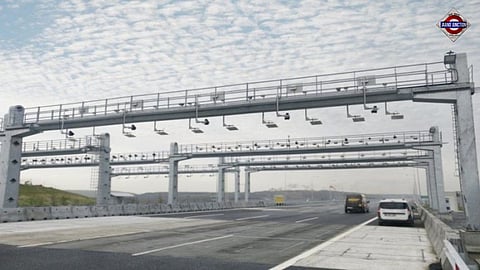

India has taken a major leap toward modernising its highway infrastructure with the launch of the country’s first barrierless, Multi-Lane Free Flow (MLFF) tolling system at the Choryasi toll plaza on NH-48 near Surat.
The system eliminates the need for physical toll booths, allowing vehicles to pass through without stopping, significantly reducing travel time and congestion.
HOW DOES BARRIERLESS FRE-FLOW TOLL WORK?
The MLFF system works by automatically identifying vehicles and deducting toll charges in real time as they drive at highway speeds.
Unlike traditional toll plazas where vehicles slow down or queue, this barrierless setup uses a network of overhead gantries equipped with advanced sensors and cameras. These structures scan vehicles as they pass beneath, ensuring seamless toll collection.
At the core of the technology is a combination of Radio Frequency Identification (RFID) and Automatic Number Plate Recognition (ANPR).
Vehicles fitted with FASTag RFID stickers are detected instantly by sensors mounted on the gantries. The toll amount is automatically deducted from the linked prepaid account.
For vehicles without FASTag, high-resolution cameras capture license plate details, and the system generates a digital invoice, which can be enforced later through penalties or fines.
The backend infrastructure is equally critical. Data captured by sensors and cameras is transmitted to a central processing system that verifies vehicle identity, calculates toll charges based on distance or vehicle category, and completes the transaction within seconds.
This entire process is designed to be frictionless, minimising human intervention and errors.
The implementation aligns with the vision of the National Highways Authority of India (NHAI) to transition toward fully digital tolling across the country.
Officials say the MLFF system can cut travel time by up to 20-30%, reduce fuel consumption caused by idling at toll booths, and lower vehicular emissions.
However, challenges remain. Ensuring high FASTag penetration, maintaining data accuracy, and addressing privacy concerns related to vehicle tracking will be key to scaling the system nationwide.
Authorities are also working on strengthening enforcement mechanisms for non-compliant vehicles.
The Choryasi rollout marks a pilot for India’s broader shift toward intelligent transport systems. If successful, barrierless tolling could soon replace conventional plazas across major highways, transforming how millions of Indians experience road travel.
