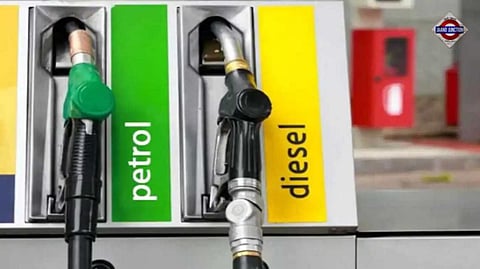

The Finance Ministry has increased the Special Additional Excise Duty (SAED) on petroleum exports, imposing Rs 3 per litre on petrol, Rs 16.5 per litre on diesel and Rs 16 per litre on Aviation Turbine Fuel (ATF). The revised rates will come into effect from Saturday, May 16, 2026.
The government has kept domestic excise duties unchanged, ensuring no immediate impact on retail fuel prices in India. The Road and Infrastructure Cess on these products has been reduced to nil as part of the revised export taxation structure.
Officials said the revised export taxation policy is aimed at increasing government revenue from petroleum exports without disturbing domestic fuel price stability.
The move is part of the government’s flexible approach towards handling global crude oil volatility and fuel supply concerns linked to tensions in West Asia. Authorities have maintained that tools such as SAED allow the Centre to quickly respond to changing international market conditions while protecting domestic consumers from sudden price shocks.
The latest change is part of the government’s fortnightly review mechanism for export duties. These levies were first introduced on March 27, 2026, following global supply uncertainties triggered by geopolitical tensions in West Asia.
Since then, the government has regularly adjusted export duties depending on global market conditions. Earlier, export duties on diesel and ATF were reduced from May 1 to maintain balance between domestic supply and export demand.
Officials said the aim of the policy is to discourage excessive exports during periods of high international fuel prices and prevent exporters from making windfall gains at the cost of domestic fuel availability.
Industry experts said the revised structure could have a moderate effect on export-oriented refiners, particularly after the introduction of a duty on petrol exports, which had earlier remained nil. Companies with stronger export exposure, such as Reliance Industries, may see some impact on profit margins.
Public sector oil marketing companies, which mainly focus on domestic sales, are expected to face limited impact from the new export duties.
Experts also noted that the government’s policy continues to prioritise fuel security for Indian consumers by making exports comparatively less attractive during periods of global uncertainty.
Fuel prices play an important role in the Indian economy as transportation costs affect nearly every sector, including agriculture, manufacturing, retail and services. Experts have warned that a prolonged increase in global crude oil prices could increase inflation and add pressure on India’s import bill.

