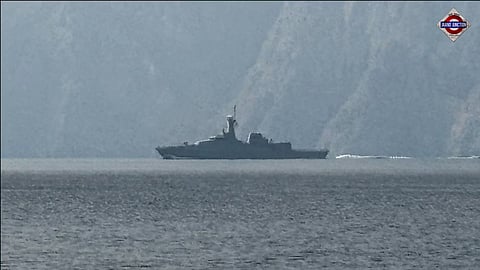

Fresh US airstrikes and a renewed naval blockade marked another major escalation in the conflict with Iran on Wednesday. US President Donald Trump also warned that American forces could target power plants and bridges unless Tehran agrees to negotiations. The latest escalation came as the fragile US-Iran memorandum of understanding reached in June appeared to unravel, with both sides stepping up military action across the Gulf.
President Donald Trump also confirmed that the US had resumed the blockade on Iranian ports and coastal areas after lifting it under last month's agreement. He also warned that Washington was prepared to expand its military campaign if Iran did not return to the negotiating table.
"I'll save the energy targets for last, but ultimately we'll hit energy targets," Trump said during an interview with Fox News.
"Next week comes the power plants, next week comes the bridges," he added. "Unless they get to the table and negotiate."
Trump also said US negotiators had warned Iranian officials that they "better make a deal."
Alongside Trump's warning, US Central Command launched another round of strikes on military targets inside Iran. The military said the operation was aimed at destroying Iranian capabilities used to attack commercial shipping in the Strait of Hormuz.

The latest strikes followed a larger operation carried out days earlier against missile sites, drone facilities, coastal defence systems and maritime assets across southern Iran.
The renewed naval blockade officially came into force at 20: 00 GMT, targeting vessels travelling to and from Iranian ports. Trump said the Strait of Hormuz remained open to international shipping, except for Iranian vessels.
The US currently has more than 20 Navy warships and hundreds of military aircraft deployed across the region.
Iran hit back as Washington intensified its pressure campaign.
The Iranian military launched drone attacks on US positions at Jordan's Azraq Air Base early on Wednesday. The Islamic Revolutionary Guard Corps (IRGC) also carried out attacks on weapons storage facilities in Bahrain and Kuwait.
Iranian state media reported fresh US strikes near Bandar Abbas, Sirik and Qeshm Island, all located close to the Strait of Hormuz.
Amid the latest escalation, Iran also said it had once again closed the Strait of Hormuz following the latest escalation.
Deputy Foreign Minister Kazem Gharibabadi said Tehran would not negotiate under military threats or economic pressure.
"If the US thinks that by tightening its measures against us, its military actions and its economic blockade, we will return to negotiations, it is making a mistake," he said.
The Strait of Hormuz remains the core of the conflict.
Before the war began in February, nearly one-fifth of global oil and gas supplies passed through the strategic waterway every day.
US Central Command chief Admiral Brad Cooper accused Iran of deliberately targeting commercial shipping.
According to Cooper, Iran attacked seven commercial vessels over the past seven days, leaving nearly a dozen civilian crew members dead, injured or missing.
"Iranian forces have also launched dozens of missiles and drones toward neighboring Gulf countries," he said.
All this came as Trump abandoned his proposal to impose a 20 per cent transit fee on cargo using the Strait of Hormuz. Instead, he said Gulf nations had offered investment commitments to the United States, though he did not provide further details.
The US also increased economic pressure on Tehran by imposing fresh sanctions on a shipping network that Washington says helps Iran bypass existing restrictions on oil exports. The US Treasury Department targeted a network linked to Mohammad Hossein Shamkhani, describing it as a key player in Iran's oil exports, container shipping and commodities trade.
Treasury Secretary Scott Bessent said the sanctions were designed to weaken Iran's financial support system.
"We are shutting down the financial infrastructure that allows the regime to continue its threats to US national security and global shipping," he said.
The Treasury said Washington has now sanctioned more than 200 individuals, companies and vessels connected to the network.
The measures freeze US-based assets of those designated and prohibit Americans from doing business with them.
The latest military strikes, sanctions and naval blockade have further eroded hopes of preserving truce, leaving the Gulf on edge and the future of one of the world's most critical energy routes increasingly uncertain.
