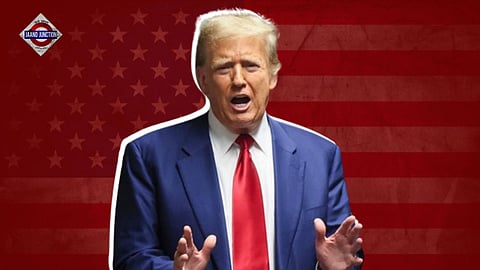

US President Donald Trump on Wednesday commented on the Russia sanctions bill that has cleared the US Senate and could expose India and four other countries to tariffs of up to 100%.
The legislation, introduced by the late Senator Lindsey Graham, moved forward on Tuesday as part of efforts to increase economic pressure on Russia over its invasion of Ukraine. India, meanwhile, remains the second-largest buyer of Russian crude oil after China.
US President Donald Trump on Wednesday commented on the Russia sanctions bill that has cleared the US Senate and could expose India and four other countries to tariffs of up to 100%.
The legislation, introduced by the late Senator Lindsey Graham, moved forward on Tuesday as part of efforts to increase economic pressure on Russia over its invasion of Ukraine. India, meanwhile, remains the second-largest buyer of Russian crude oil after China.
The bill, which cleared a crucial procedural vote in the US Senate with an 86-12 vote, proposes sanctions against Russian officials and gives the US president the authority to impose heavy tariffs on countries that continue to buy Russian oil and gas.
The proposed legislation names India, China, Slovakia, Hungary and Azerbaijan as countries that could face tariffs aimed at reducing their dependence on Russian energy imports.
If passed, the bill would allow President Donald Trump to impose tariffs of up to 100% on major buyers of Russian energy, including India. The decision to remove or continue these tariffs would remain at the president’s discretion.
While several Democrats have backed stricter measures against Russia, some have expressed concerns over granting Trump wider tariff powers. They have warned that such action could lead to higher import costs.
These concerns could impact the bill’s progress as it moves through the Senate and later reaches the House of Representatives, which is scheduled to reconvene in September.
Some Democrats have already indicated that they may oppose the legislation. Before becoming law, the bill will have to clear further procedural hurdles in the Senate before moving to the House for consideration.
The latest legislation comes after the US had already taken action against India over its purchase of Russian crude oil.
In August 2025, Trump imposed an additional 25% tariff on India, accusing New Delhi of “fueling Putin’s war". This pushed the overall tariff on Indian goods entering the US to 50%, a level similar to that imposed on China and Brazil.
The move strained India-US ties, with ongoing trade negotiations coming to a standstill.
However, after the US-Iran war began in February, global energy markets faced disruptions following the blocking of the Strait of Hormuz. The resulting energy crisis affected countries across the world, including India.
Amid the situation, the US issued a waiver on Russian oil imports, allowing India to resume purchases.
Following the waiver, India’s imports of Russian crude oil increased by 34% in June 2026, reaching a record high. Data from the Centre for Research on Energy and Clean Air showed that the imports were valued at €4.5 billion and accounted for around 36% of Russia’s crude oil export revenue.
If the bill is passed and implemented, it could create fresh challenges for India-US relations.
The two countries are currently negotiating a bilateral trade agreement, which is expected to bring down the overall tariff on Indian exports to 18%.
At present, Indian goods entering the US face a 15% tariff after the US Supreme Court struck down Trump’s tariff hikes. However, this rate is temporary and is set to expire on July 24.

