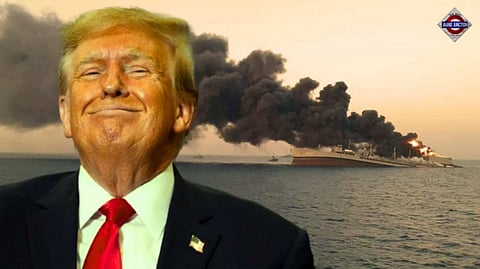

US President Donald Trump on Sunday said that Iran has accepted “most" of a 15-point proposal put forward by Washington to end the ongoing conflict, with the framework conveyed through Pakistan in indirect negotiations.
Speaking to the Financial Times, Trump indicated that Tehran had largely agreed to the demands. “They gave us most of the points. Why wouldn’t they?" he said, adding that the US may still push for “a couple of other things" as discussions progress.
The president described the talks as both direct and indirect, claiming “very good meetings" and meaningful movement on key issues. The US President asserted that Iran had also supplied large quantities of oil as a sign of commitment to the process.
“They gave us 10 massive boatloads of oil," he said, referring to what he earlier described as a “present". Trump added that Iran had since offered 20 more shipments, which are set to begin moving from Monday. “Just to prove that they’re serious," he remarked.
As of now, the full document hasn’t been officially released, however, multiple reports point to a framework built around three sweeping demands and a set of incentives.
For starters, it hinges on dismantling Iran’s nuclear programme. Trump wants a total rollback of Iran’s nuclear capabilities, which includes ending all uranium enrichment, handing over enriched material, shutting down key facilities like Natanz, Fordow and Isfahan, and allowing full international inspections, The Guardian reported.
This closely mirrors earlier US demands. According to The Guardian, the proposal is essentially a revived version of a 2025 plan that collapsed after Israeli strikes.
Another major demand is that Iran stop funding and arming regional groups and abandon its “proxy model" across the Middle East. This would affect groups like Hezbollah and the Houthis who are key to Iran’s regional influence.
The plan also addresses immediate war concerns—Keep the Strait of Hormuz open for global shipping and move toward a ceasefire window (reportedly around a month) for negotiations, New York Post reported. Given the global oil shock from the Iran war, this is a critical component.
In exchange, the US is offering full sanctions relief, support for a civilian nuclear programme under supervision, and removal of the “snapback" sanctions mechanism, according to Moneycontrol.
The Guardian highlights that even these incentives are not new and were part of earlier failed negotiations.
