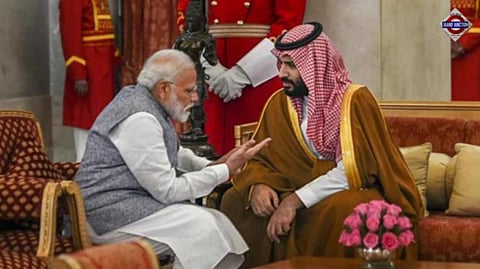

Prime Minister Narendra Modi on Monday held telephonic conversations with Bahrain’s King Hamad Bin Isa Al Khalifa and Saudi Crown Prince Mohammad Bin Salman to condemn attacks on both countries, as Iran continues its attacks on regional bases in retaliation for the US-Israeli strikes.
The United States and Israel targeted Iran in coordinated strikes on February 28 that killed Supreme Leader Ayatollah Ali Khamenei and dozens of other senior figures, kicking off a furious response from Tehran that has drawn fierce condemnation from other Gulf countries.
PM Modi on Sunday spoke with UAE President Sheikh Mohamed bin Zayed Al Nahyan and strongly condemned Iranian attacks on the Gulf country and condoled the loss of lives. He also expressed concerns over the lives of Indian citizens in the Gulf countries.
PM Modi In Touch With Several Countries
Earlier today, Prime Minister Narendra Modi said India continues to urge peace and stability in West Asia amid rising tensions in the region. He emphasised that India supports resolving conflicts through dialogue and diplomacy.
The PM said when two democracies stand together, their voice becomes stronger on global issues. The Prime Minister added that India is in contact with several countries to ensure the safety and security of Indian citizens affected by the situation.
His remarks came after a conversation with Israeli Prime Minister Benjamin Netanyahu amid the current regional situation in West Asia, as tensions continue to rise across the region following recent military developments. PM Modi also chaired a meeting of the Cabinet Committee of Security to address the ongoing conflict.
Tehran’s retaliatory attacks on regional bases have heightened fears of a wider conflict and increased regional instability, as US allies pledged to help stop Iran’s missile and drone assault. Furthermore, the Lebanese group Hezbollah claimed strikes on Israel, and Israel fired back.
The attacks came two days after the latest US-Iran talks aimed at putting controls on Tehran’s nuclear programme. Countries are closely monitoring the rapidly evolving situation and its potential impact on security across West Asia.
