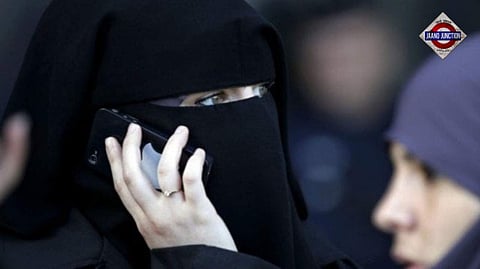

Calling the niqab "alien to our society," the Spiritual Administration of Muslims of Kyrgyzstan said that it could allow "attackers in disguise" to hide their identities. The niqab covers the body and face, leaving only the eyes visible.
In January, Kyrgyzstan President Sadyr Žaparov issued a decree banning clothes that entirely cover women's bodies and faces.
Now, the ban has received the backing of Kyrgyzstan's official Muslim governing body.
As quoted by local media, the Spiritual Administration of Muslims of Kyrgyzstan on Tuesday (Apr 8) said: "The niqab is alien to our society".
"It is possible that our niqab-wearing sisters are attackers in disguise, which threaten public safety. So it is important to openly show your face to be recognisable," it noted.
Women found wearing the Niqab (also known as burqa or Parandža) could be fined 20,000 Som — about $230, more than half the country's average monthly wage.
President Sadyr Japarov on Saturday (Apr 5) said women in Kyrgyzstan had traditionally "never worn a burqa" and said that the policy was "important for ensuring public safety".
The law is part of a wider effort by five Muslim-majority countries of Central Asia to curb rising Islamist influence. Since the fall of the Soviet Union, religious revival across the region has triggered concern among its largely secular states. Thousands of citizens from Central Asia are believed to have joined jihadist groups in the Middle East during the rise of ISIS, reports Daily Mail.

