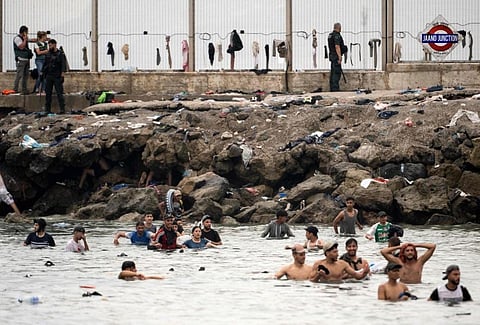

CEUTA, Spain, Aug. 1 — Thousands of migrants who entered Spain's North African enclave of Ceuta began returning voluntarily to Morocco on Friday, a day after a mass crossing that left at least 57 people dead and overwhelmed the small territory's resources.
Spanish authorities said most of the more than 50,000 migrants who crossed into Ceuta by land and sea had already started making their way back to Morocco. Hundreds were seen returning through official border crossings and openings in the border fence.
Many migrants cited a lack of food, shelter and basic services as the reason for leaving. Some also alleged they were mistreated after entering the enclave.
The mass crossing unfolded over two days, with many migrants swimming around coastal barriers while others crossed on foot. According to Reuters, Moroccan security forces used batons and tear gas to disperse crowds gathered near Ceuta's border in an effort to prevent further crossings. On the Spanish side, military vehicles and additional security personnel were deployed as authorities sought to regain control of the border.
Spanish authorities said around 45,000 of the estimated 60,000 people who entered Ceuta between Thursday and Friday morning had already returned to Morocco within hours. Many had spent the night sleeping on the streets after failing to find accommodation or assistance.
Officials in Ceuta linked the surge in arrivals to a Spanish Supreme Court ruling issued earlier this month. The court held that migrants intercepted at sea cannot be immediately returned under the enclave's long-standing "border rejection" system, although the ruling does not apply to those who enter by land.
Some analysts have also pointed to Spain's recent immigration reforms, which provide pathways to legal residency and work permits for certain undocumented migrants already living in the country, as a possible factor influencing migration flows. However, authorities have not established a direct link between the policy changes and the latest surge in crossings.
