
At least 23 people were killed and more than 90 injured after Russia launched one of its largest aerial assaults on Ukraine in recent months, firing hundreds of drones and dozens of missiles at cities across the country overnight.
The attack came amid warnings from Ukrainian authorities that Moscow was preparing another major strike as the four-year-old war enters a more intense phase. Russia has stepped up attacks following an alleged Ukrainian strike last month in the Russian-occupied Luhansk region that killed 21 people. Kyiv has denied responsibility.
Ukraine’s air force said Russia launched 656 drones and 73 missiles during the assault. While Ukrainian air defences intercepted many of them, 54 drones and 33 missiles penetrated the country’s multi-layered defence shield, leaving residential buildings damaged and several areas reduced to rubble.
Russia said the barrage targeted Ukraine’s military-industrial complex and included hypersonic missiles. Moscow has repeatedly denied targeting civilians.
The scale of the attack has once again raised a key question: Why is Ukraine finding it increasingly difficult to stop Russian missiles and drones?
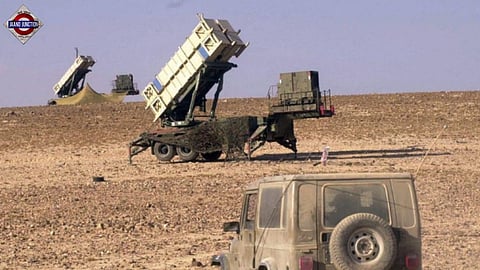
The answer lies partly in a growing shortage of Patriot interceptor missiles, one of the few systems capable of shooting down advanced ballistic missiles.
The MIM-104 Patriot, manufactured by Raytheon and Lockheed Martin, has been a cornerstone of Ukraine’s air defence network. However, supplies of Patriot interceptors have come under pressure after the system was heavily used by the United States and Israel during their conflict with Iran, reducing available stockpiles.
Ukrainian President Volodymyr Zelenskyy acknowledged the growing challenge, saying current air-defence supplies are insufficient to intercept a significant share of incoming missiles.
“The current level of supplies for air defence does not allow us to shoot down a significant share of the missiles," Zelensky said, renewing his appeal to the United States and European allies for additional military assistance.
“All partners together, everyone in Europe, must continue working so that there are missiles for our air defence," he added.
Kyiv faces a growing challenge as demand for Patriot missiles far exceeds supply. The United States, which manufactures the PAC-3 Missile Segment Enhancement (MSE) interceptor used by the Patriot system, currently produces around 650 missiles annually. Those deliveries must be shared between the US military and at least 17 allied countries that also operate the system, as per the Center For Strategic & International Studies.
While manufacturer Lockheed Martin plans to increase production to as many as 2,000 interceptors a year, that expansion will take time. In the meantime, Ukraine remains dependent on limited supplies from existing US and allied stockpiles.
The situation has become more difficult under President Donald Trump’s “America First" approach, which prioritises replenishing US military inventories before committing additional deliveries abroad. As a result, Ukraine has effectively moved down the queue for future Patriot supplies at a time when Russia is intensifying its aerial campaign.
Adding to Kyiv’s concerns, the US Army’s next major procurement of 3,203 Patriot missiles under its FY2027 budget is not expected to begin arriving until May 2029. Until production catches up with demand, Ukraine is likely to face continued pressure in defending its cities and critical infrastructure from large-scale Russian missile and drone barrages.

