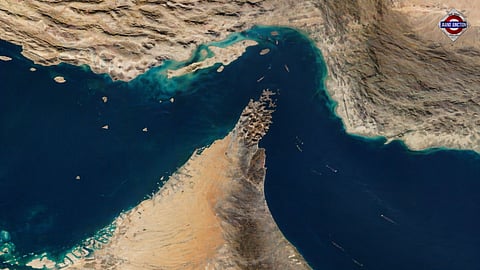

A Small Place, A Big Impact
Some places don’t look important at first. The Strait of Hormuz is one of them.
On a map, it’s just a narrow strip of water between Iran and Oman. But in reality, a huge part of the world’s oil passes through it every day. That alone makes it one of the most critical routes for the global economy.
What happens here doesn’t stay here.
Right now, tensions between the United States and Iran are not new, but they are serious enough to keep this region under constant watch. And because of that, this narrow passage has turned into a pressure point for the entire world.
Why This Strait Matters So Much
To understand its importance, you don’t need complex data. Just one idea is enough: dependence.
A large share of global oil and gas moves through this route. So even a small disruption can create a big reaction.
The interesting part is this:
it’s not always the actual disruption that causes damage. Sometimes, just the fear of disruption is enough.
Markets react quickly. Prices go up. Uncertainty spreads.
A Game of Pressure, Not Closure
Neither the US nor Iran actually wants to shut this route completely.
Iran has often hinted that it can block the Strait if pushed too far. On the other side, the US maintains a strong presence to keep the route open.
So what we see is not a full conflict, but a constant pressure game.
The Strait becomes a tool. Not closed, but never fully at ease.
How It Affects the World
When tension increases, the first visible change is in oil prices.
But that’s just the beginning.
Fuel becomes expensive. Transport costs go up. Industries start feeling the pressure. Slowly, this turns into inflation.
At the same time, shipping becomes riskier. Insurance costs rise. Deliveries get delayed.
All of this affects daily life more than we realise.
India’s Situation
India may be far from this region, but it is deeply connected to it.
A major portion of India’s oil imports passes through this route. And since the country depends heavily on imported energy, even small price changes matter.
You see it in fuel prices.
You see it in business costs.
And eventually, you see it in everyday expenses.
There is also a bigger concern. If energy prices stay high for a long time, it affects the overall economy, including trade balance and inflation.
Not Everyone Feels It the Same Way
Some countries actually benefit from higher oil prices. These are usually the exporters.
Developed nations can manage better because they have reserves and more options.
But developing countries face the real pressure. Higher fuel costs can slow growth and create financial stress.
In some cases, it can even lead to social problems.
It’s Not Just About Oil
Oil gets all the attention, but it’s not the only thing that matters here.
Natural gas also moves through this route, which affects electricity supply in many countries. Fertilizer costs are linked to gas, so agriculture is also impacted.
Shipping costs, insurance risks, supply delays… all of these are connected.
So this is not just an energy issue. It’s a system-level issue.
What Can Be Done
The solution is not simple, but it is clear.
Countries need to reduce overdependence on one region. Diversifying energy sources is important.
Strategic reserves help in the short term.
Renewable energy is not just about the environment anymore. It is also about reducing risk.
Domestic production, where possible, adds stability.
And finally, diplomacy matters. Without stability in the region, no economic solution is enough.
Final Thought
The Strait of Hormuz may look small, but its impact is anything but small.
It reminds us how connected the world has become, and how fragile that connection can be.
For countries like India, the message is simple:
Energy security is not just about supply.
It is about being prepared for uncertainty.
Because sometimes, the biggest global effects come from the smallest places.
Views expressed in Citizen Junction stories are that of the author and solely of the author, submitted to Jaano Junction through WRITE. Start writing on Jaano Junction to get your opinion published. Click Here to start your citizen journalism journey.
