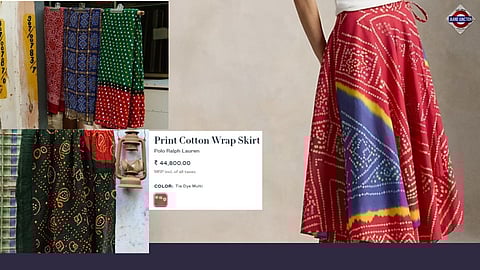

The controversy centres around a cotton wrap skirt listed on the brand’s official website under its Polo line. Priced at Rs 44,800, the product is described as featuring a “vibrant design inspired by traditional Bandhini tie-dye techniques and motifs.” However, the description does not explicitly mention India, where the centuries-old Bandhini craft originates, nor does it acknowledge the artisan communities behind it.
Critics argue that while global brands often draw inspiration from traditional crafts, failing to credit their cultural roots raises concerns about erasure and commercialisation without recognition.
This is not the first time international labels have faced such backlash. In recent years, brands like Prada and Ralph Lauren have been called out for incorporating elements such as Kolhapuri-style footwear and traditional jhumkas without proper attribution.
The latest episode has once again highlighted the fine line between inspiration and appropriation in the fashion industry, with growing calls for greater transparency, cultural sensitivity, and recognition of indigenous craftsmanship.
As conversations around ethical fashion gain momentum, the focus is increasingly shifting toward how global brands engage with traditional art forms and whether they ensure due credit to their origins.
Bandhani, also known as Bandhej, is far more than a simple dyeing method — it is a centuries-old textile tradition deeply rooted in the cultural fabric of India.
The craft involves meticulously tying thousands of tiny knots on fabric before dyeing it, creating its signature dotted patterns. Each knot resists the dye, forming intricate designs that are impossible to replicate through modern, mass-produced techniques.

What sets Bandhani apart is the labour-intensive and skill-driven process behind it. Artisans, often from generations of craft families, spend hours — sometimes days — hand-tying fabric with precision and consistency. The technique demands patience, expertise, and an inherited understanding of patterns, colours, and fabric behaviour.
Beyond technique, Bandhani carries cultural and emotional significance. It is traditionally worn during festivals, weddings, and important life events, symbolising prosperity, joy, and heritage in regions like Gujarat and Rajasthan.
Reducing Bandhani to just a “tie-dye technique” overlooks its historical depth, artisanal value, and cultural identity — turning a living tradition into a generic design reference.
Beyond its visual appeal, Bandhani holds deep cultural and emotional value. It is traditionally worn during weddings, festivals, and other auspicious occasions, symbolising joy, prosperity, and heritage. Reducing it to a generic dyeing technique risks erasing not just its history, but also the communities that have preserved and practiced it for generations.
Across India, several regions are known for producing Bandhani in its most authentic form. In Gujarat, cities like Jamnagar and Bhuj are celebrated for their intricate craftsmanship, with artisans specialising in fine detailing and traditional motifs passed down through generations.
In Rajasthan, Jaipur and Jodhpur offer their own distinct interpretations of the craft, known for bold colour palettes and unique pattern styles that reflect regional aesthetics.
Today, authentic Bandhani pieces — from sarees and dupattas to skirts — can be found in local bazaars as well as curated handloom stores. Buying these directly supports artisan communities, ensuring that this centuries-old craft continues to thrive in its true form.
Bandhani is not just a local wear in India. Bollywood celebrities like Alia Bhat, Deepika Padukone, Rakul Preet, Sonam Kapoor and many more, have constantly embraced their Bandhani looks.
This subtle omission has become central to the controversy, with many questioning whether a vague nod to “inspiration” is sufficient when the design is so clearly tied to a specific cultural tradition.
The controversy surrounding Ralph Lauren’s Bandhani-inspired design goes far beyond a single product. It reflects a broader shift in how consumers engage with fashion — where interest is no longer limited to aesthetics, but extends to origin, authenticity, and ethical responsibility.
Today’s buyers are increasingly aware of the stories behind what they wear. Crafts like Bandhani are not just visual motifs but living traditions tied to communities, history, and identity. When such elements are used without clear acknowledgment, it raises questions about representation and respect.
As global brands continue to draw inspiration from traditional crafts, expectations are evolving. Recognition of origins, transparency in sourcing, and fair representation of artisan communities are becoming essential, not optional.
Whether through meaningful collaborations, storytelling, or proper attribution, the fashion industry is now being pushed toward a more responsible and culturally aware approach — one that values heritage as much as design.
